
The ASVAB controls two things at once. It decides whether you qualify to enlist, and it shapes which military jobs you can actually get. That makes preparation worth real effort. A strong plan, steady daily practice, and smart use of practice tests can lift your score well above the minimum and open better career options.
This guide walks through the test structure, branch score targets, timeline-based study plans, and the test-day tactics that matter most. The aim is simple: get you to a competitive score with the time you have.
 ASVAB Test Prep · All Military BranchesTry a free ASVAB test
Take a free practice test to see how close you are to your branch's minimum score.
Understand the ASVAB Before You Study

The ASVAB, or Armed Services Vocational Aptitude Battery, is a multiple-aptitude test that measures developed abilities and predicts success in military training and jobs. According to the official ASVAB program, more than one million applicants and students take it each year.
The test contains ten subtests grouped into four domains. The verbal domain covers reading and vocabulary. The math domain covers arithmetic and high school mathematics. The science and technical domain covers electronics, automobiles, tools, and mechanics. The spatial domain covers assembling objects.
Your most important number is the AFQT, the Armed Forces Qualification Test. The AFQT is not a separate exam. It is a percentile score built from only four subtests: Word Knowledge, Paragraph Comprehension, Arithmetic Reasoning, and Mathematics Knowledge. Every branch uses it to decide whether you can enlist.
There are two versions of the test. The enlistment version is the CAT-ASVAB, a computer adaptive test taken at a Military Entrance Processing Station, known as MEPS. About 70 percent of applicants take this computerized version. The ASVAB Career Exploration Program is a separate paper and pencil version, the P&P-ASVAB, taken by high school and community college students rather than for recruitment.
The two formats also differ in length. The CAT-ASVAB has 135 scored questions and a 197 minute limit, and its adaptive testing adjusts question difficulty in real time as you answer. The paper version has 225 questions and a 149 minute limit. The ASVAB itself is free to take, and you can sit it from age 16.
Here is the question and time breakdown for the computerized version:
| Section | Questions | Time |
|---|---|---|
| General Science | 15 questions | 12 minutes |
| Arithmetic Reasoning | 15 questions | 55 minutes |
| Word Knowledge | 15 questions | 9 minutes |
| Paragraph Comprehension | 10 questions | 27 minutes |
| Mathematics Knowledge | 15 questions | 31 minutes |
| Electronics Information | 15 questions | 10 minutes |
| Auto Information | 10 questions | 7 minutes |
| Shop Information | 10 questions | 6 minutes |
| Mechanical Comprehension | 15 questions | 22 minutes |
| Assembling Objects | 15 questions | 18 minutes |
| Total | 135 scored questions | 197 minutes |
And the breakdown for the paper and pencil version:
| Section | Questions | Time |
|---|---|---|
| General Science | 25 questions | 11 minutes |
| Arithmetic Reasoning | 30 questions | 36 minutes |
| Word Knowledge | 35 questions | 11 minutes |
| Paragraph Comprehension | 15 questions | 13 minutes |
| Mathematics Knowledge | 25 questions | 24 minutes |
| Electronics Information | 20 questions | 9 minutes |
| Shop Information | 25 questions | 11 minutes |
| Mechanical Comprehension | 25 questions | 19 minutes |
| Assembling Objects | 25 questions | 15 minutes |
| Total | 225 questions | 149 minutes |
Minimum Scores and What Counts as a Good Score
AFQT scores run on a scale of 0 to 99 and work as percentiles. Your number reflects how you did against a reference group, so a 65 means you performed as well as or better than 65 percent of that group. The average score is 50.
Each branch sets its own floor. These are the current minimum AFQT scores by branch:
| Military Branch | Minimum ASVAB Score |
|---|---|
| Army | 31 |
| Navy | 31 |
| Marine Corps | 31 |
| Air Force | 31 |
| Coast Guard | 32 |
Meeting the minimum only gets you in the door. A good score depends on your branch and the job you want. An above average Navy score sits around 60 or higher, and most competitive roles ask for 50 or above in specific areas. Higher scores unlock better training, higher pay, and access to technical fields.
It helps to see where a result lands. The percentile categories below show how the scale breaks down:
| Category | AFQT Percentile Score |
|---|---|
| Category I | 93-99 (Highest) |
| Category II | 65-92 |
| Category III A | 50-64 |
| Category III B | 31-49 |
| Category IV A | 21-30 |
| Category IV B | 16-20 |
| Category IV C | 10-15 |
| Category V | 0-9 (Enlistment denied) |
With that table in mind, common questions get clearer. A 70 is a strong score. It falls in Category II, well above the average of 50, and qualifies you for most jobs across every branch. A 47 sits in Category III B. It clears the minimum for enlistment in most branches, but it can limit your choices, since many roles want 50 or higher.
How Long Should You Study?
Most candidates need 8 to 12 weeks to reach a target score, with about 6 weeks as a realistic minimum. A common rule is to begin at least two months before your test date and study one hour a day at a consistent time. Short daily sessions beat last minute marathons every time.
Your timeline decides your strategy.
Three months out
With three months, you can build real understanding. In month one, take a diagnostic test to set a baseline, then review one subtest per week with 30 to 45 minutes of daily concept work. In month two, drill your weak areas and move to a practice test every two weeks under timed conditions. In month three, switch almost entirely to full-length timed tests, reviewing every error right after you finish.
One month out
With a month, raise daily study to two or three hours and aim it squarely at your weakest subtests. Keep taking practice tests, moving from biweekly to weekly as test day nears, and keep reviewing your mistakes.
One week out
When only a week remains, focus entirely on the four AFQT subtests and set the technical sections aside. This protects your eligibility even if it costs you some job options. A workable daily split is one hour on Arithmetic Reasoning, 45 minutes on Word Knowledge, 45 minutes on Paragraph Comprehension, and one hour on Mathematics Knowledge, with heavy use of answer elimination.
For a steadier rhythm, a one hour daily plan spread across the week keeps every subject fresh:
| Day | Time | Sections to Study |
|---|---|---|
| Monday | 7-8 p.m. | Mathematics knowledge |
| Tuesday | 7-7:30 p.m. 7:30-8 p.m. | Arithmetic reasoning Paragraph comprehension |
| Wednesday | 7-7:30 p.m. 7:30-8 p.m. | Mathematics knowledge Word knowledge |
| Thursday | 7-8 p.m. | Mathematics knowledge |
| Friday | 7-7:30 p.m. 7:30-8 p.m. | "Extra" section (GS, AS, MC, or EI) Paragraph comprehension |
| Saturday | No studying — Read a book to help boost vocabulary! | |
| Sunday | 7-8 p.m. | Review any trouble spots you had. Maybe take a practice test to see how you've improved! |
Whatever your timeline, spaced repetition pays off. Even 15 to 20 minutes of daily flashcard review, started about 6 weeks out, can raise your score. This kind of distributed practice locks vocabulary and formulas into long-term memory far better than cramming the night before.
ASVAB Test Prep · All Military BranchesTry a free ASVAB testTake a free practice test to see how close you are to your branch's minimum score.
Focus on the AFQT First: Math and Verbal
Roughly 95 percent of your enlistment success comes down to math and English, because the AFQT is built from just four subtests. Put your energy there before anything else, and within those four, give extra time to your weakest.
Arithmetic Reasoning
Arithmetic Reasoning turns words into math. Start by naming the question type, whether it is a percentage, a ratio, a profit and loss problem, or a distance, rate, and time problem. Break multi-step problems into stages, and aim for about 1.5 minutes per question. Drill the patterns that show up often, like discounts, interest, and mixture problems.
Mathematics Knowledge
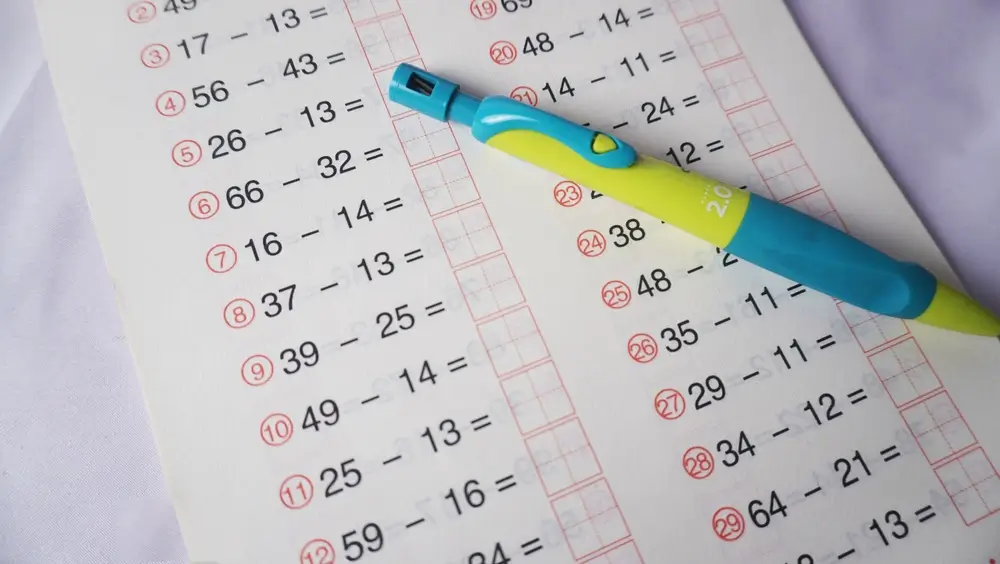
Mathematics Knowledge stays within basic algebra and geometry. If fractions, percentages, ratios, and simple equations feel rusty, that is where your study time pays off most. Most people struggle more with setting up the equation than with the calculation itself, so practice translating English into math.
Word Knowledge and Paragraph Comprehension
Word Knowledge rewards vocabulary built on roots, prefixes, and suffixes. Knowing that port means carry, or that bene means good, lets you decode unfamiliar words. Study 10 to 15 words a day with flashcards and use spaced repetition to keep them. For Paragraph Comprehension, read the question first so you know what to look for, and read widely day to day, since regular reading lifts both verbal subtests at once.
Technical Subtests and the Jobs They Unlock
The six subtests outside the AFQT decide which jobs you qualify for. General Science, Electronics Information, Auto and Shop Information, Mechanical Comprehension, and Assembling Objects feed into line scores, the composite scores that map to Military Occupational Specialties, or MOS. Study these only after the four AFQT subtests are under control.
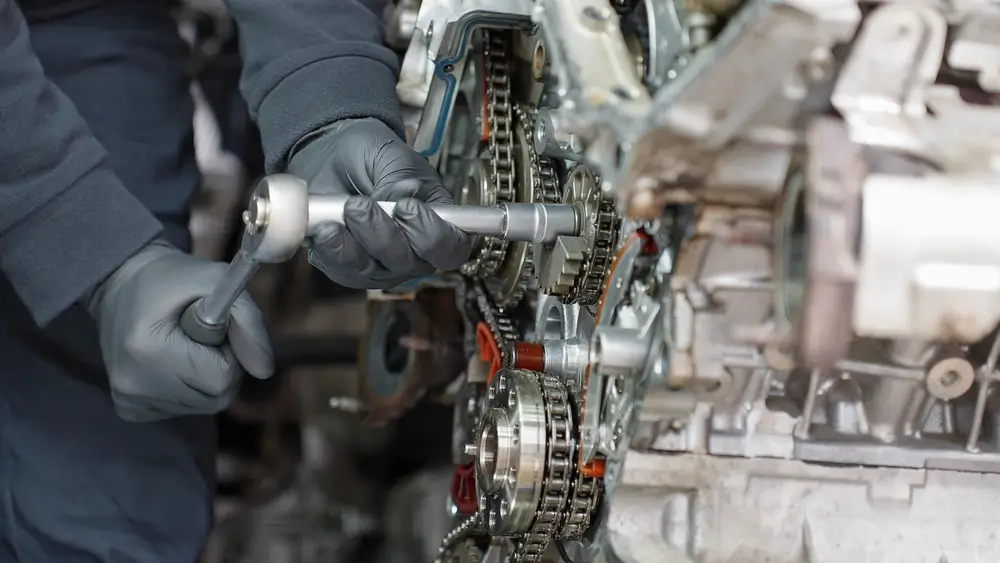
General Science covers biology, chemistry, physics, and earth science fundamentals. Electronics Information covers circuits, Ohm's Law, and basic components like diodes and capacitors. Mechanical Comprehension covers simple machines such as levers, pulleys, and gears, along with forces, Newton's laws, and mechanical advantage. Auto and Shop Information covers engine parts, fuel and ignition systems, and the right tool for each job. Assembling Objects tests spatial reasoning, so practice picturing how pieces fit together.
These sections reward direct knowledge more than test technique, so a hands-on approach works well. Build a chair, fix a motorcycle, or rewire a light switch while you study the theory behind it, and the material sticks.
Line scores combine subtests differently for each career area. The General Technical, or GT score, combines Arithmetic Reasoning with the verbal subtests, Word Knowledge and Paragraph Comprehension. A mechanical maintenance line score pulls from Mechanical Comprehension, Electronics Information, and Auto and Shop Information instead. If you already know the MOS you want, find its required line scores and study toward them rather than spreading effort evenly.
Practice Tests Are Your Best Study Tool
Nothing improves your score faster than full-length practice tests. They show you the real format, build your pacing, and give immediate feedback on where you are weak. Start with a diagnostic test in your first week to find your weak subtests, then plan around them.
Take at least three to four full practice tests before exam day, and hold each session to 2 hours and 30 minutes so you get used to the time pressure. This matters most if you tend to get nervous during exams.
The step most people skip is the review. After each test, go through every wrong answer and understand why you missed it. A useful checkpoint is to take one practice test about a month out, then retake a similar one two weeks before test day to measure progress and spot what still needs work.
Test-Day Tactics and Mistakes to Avoid
There is no general penalty for guessing, so answer every single question. A blind guess gives you a 25 percent chance. Eliminate one wrong option and your odds rise to about 33 percent. Eliminate two and you are at 50-50.
The two formats reward slightly different habits. On the paper version, the P&P-ASVAB, you can skip hard questions and come back, so answer what you know first and fill in guesses for anything left if time runs out. The CAT-ASVAB does not let you skip or return, and its adaptive scoring carries a real catch. According to the official ASVAB program, the CAT-ASVAB applies a relatively large penalty when several wrong answers come at the end of a subtest. If time is short on the computer version, keep reading and answering properly rather than firing off random guesses, and slow down after a guess to get the next question right.
Pacing matters on both versions. Do not sink too much time into one hard question if it leaves you rushing the later ones.
A handful of mistakes sink otherwise capable test takers. Practicing without a timer creates false confidence. Studying every subject equally wastes time you should spend on weak areas. Chasing technical scores while neglecting the AFQT can leave you unqualified despite strong knowledge. Cramming the night before drains you on test day. And skipping practice tests means meeting the format cold.
Retake Rules and the Future Soldier Preparatory Course
You can retake the ASVAB, but the timing is strict, and one rule carries real risk: your most recent score counts, not your highest. A weak retake can cost you eligibility you already had, so retest only when you are confident you will improve.
After your first test, you wait one calendar month to retake. After the second, you wait another month. Any further attempt requires a six month wait, and you are limited to three attempts within a year. Scores stay valid for two years for enlistment.
Low scores are not the end of the road. Applicants who score between 21 and 30 may qualify for the Army's 90 day Future Soldier Preparatory Course, an academic track that covers every ASVAB subject and offers chances to retest. Those scoring 31 to 49 may qualify for a 30 day version with one retake, which can open a better MOS. An expanded option adds a fitness track for applicants who exceed body fat standards.
Frequently Asked Questions
What is the easiest way to study for or pass the ASVAB?
There is no reliable shortcut. The most efficient approach is to take a diagnostic test, prioritize the four AFQT subtests and your weakest areas, then use timed practice sets and review every mistake. Official guidance also recommends becoming familiar with the subtests and sample questions before test day.
What is the best way to prepare for the ASVAB?
Build a schedule around your test date rather than studying every subject equally. Start with a full-length diagnostic, spend the most time on weak AFQT areas, practice under realistic time limits, and add technical subtests that matter for your desired military occupation.
How long should it take to study for the ASVAB?
There is no single required study duration. Some sources recommend beginning at least two months ahead for comprehensive preparation, while focused plans can cover four to eight weeks; the correct timeline depends on your diagnostic score, target branch, desired job, and available study time.
Are you supposed to study for the ASVAB?
Yes. The official ASVAB Testing Program does not endorse one specific commercial preparation method, but it recommends a strong foundation in mathematics, English, and science, along with familiarity with the subtests and sample questions. Practice and targeted review are useful ways to prepare for the actual testing conditions.
Is it hard to get a 50 on the ASVAB?
A score of 50 is the mean on the ASVAB scoring scale described by the sources, so it represents average performance relative to the norm group rather than an unusually high score. Whether it feels difficult depends on your starting knowledge, time pressure, and target subtests.
Is a 70, 72, or 77 a high ASVAB score?
Yes. The published AFQT percentile categories place scores from 65 through 92 in Category II, so 70, 72, and 77 are above-average scores. The exact military jobs available still depend on branch requirements and line scores, not only the AFQT percentile.
Is a 47 a good or bad ASVAB score?
A 47 falls in the published Category III-B range of 31-49, so it is above the commonly cited overall minimum of 31 but below the average score of 50. Whether it qualifies you for a specific branch or MOS depends on current branch rules and the required line scores for that job.
Is a 27 a bad ASVAB score?
A 27 falls in Category IV-A, the 21-30 range in the published score categories. It is below the commonly cited overall minimum of 31, although eligibility rules and possible preparation or retest pathways should be confirmed with a recruiter.
Is a 25 a good ASVAB score?
A 25 is also in Category IV-A, within the 21-30 percentile range, and is below the commonly cited minimum AFQT score of 31 for enlistment. Treat it as a signal to diagnose weaknesses and focus on the four AFQT subtests before considering a retest.
Sources
ASVAB Test Prep · All Military BranchesTry a free ASVAB testTake a free practice test to see how close you are to your branch's minimum score.

ASVAB Cheat Sheet: Math Formulas & Scores to Memorize

CAT-ASVAB Explained: How the Computer Adaptive Test Works