
If you are thinking about joining the U.S. military, the ASVAB is usually the first formal step. It is the entrance exam almost every applicant takes, and it shapes two things at once: whether you can enlist and which military jobs you can hold. This guide explains what the test actually is, how it is structured, how scoring works, and how hard it really is, so you know what to expect before you sit down for it.
What the ASVAB Is, and Why It Exists
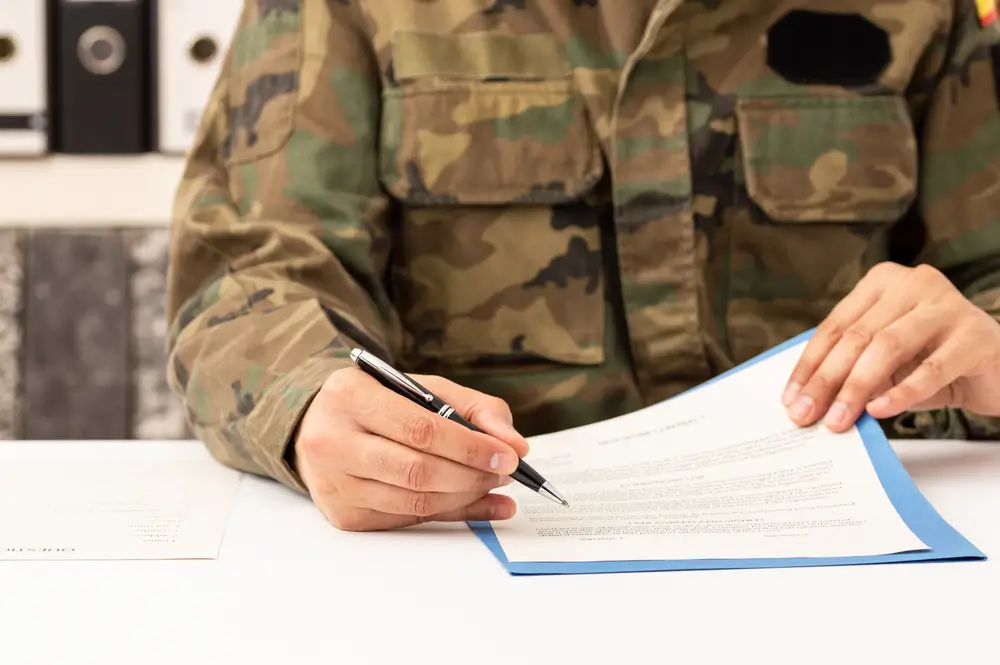
The ASVAB, short for Armed Services Vocational Aptitude Battery, is a multiple-aptitude battery developed and maintained by the Department of Defense. It measures developed abilities and helps predict future academic and occupational success in the military. In practice, it is the test that decides whether you qualify to serve and what role you are suited for.
 ASVAB Test Prep · All Military BranchesTry a free ASVAB test
Take a free practice test to see how close you are to your branch's minimum score.
One detail matters more than people expect. The ASVAB is an aptitude test, not an achievement test. According to Chuck Shaw, an Education Services Specialist at a MEPS testing section, the exam measures your potential to learn rather than what you have already learned. The point is to match each person with the occupations that fit their strengths, not to grade past schooling.
The test is not new. The ASVAB program dates its origins to 1968, when the test was first introduced, with all branches of the military adopting it in 1976. A major revision followed in 2002, and in 2004 its percentile scoring was renormalized so that a score of 50% reflects performing better than exactly half of test takers.
It also runs at scale. The official ASVAB program reports that it is administered to more than one million military applicants, high school, and post-secondary students each year, at more than 14,000 schools and Military Entrance Processing Stations nationwide.
The exam is also the backbone of the ASVAB Career Exploration Program (ASVAB CEP), which is built for students in grades 10 to 12. The ASVAB Career Exploration Program is more than a test. It pairs aptitude results with career exploration tools so students can see which jobs match their skills and interests, in both military and civilian fields. So while most people meet the ASVAB through recruitment, many first encounter it through the ASVAB Career Exploration Program in school.
ASVAB Test Format: The 10 Subtests and What They Cover
The ASVAB is built from 10 subtests that measure aptitude across four domains: Verbal, Math, Science and Technical, and Spatial. Every question is multiple-choice, and the subtests are always given in the same order.
The Verbal domain covers Word Knowledge and Paragraph Comprehension. Word Knowledge measures your ability to identify the correct meaning of words and the best synonym for a given word. Paragraph Comprehension measures your ability to pull information from short written passages.
The Math domain covers Arithmetic Reasoning and Mathematics Knowledge. Arithmetic Reasoning is about solving word problems that require basic calculations, while Mathematics Knowledge tests high school math concepts such as algebra and geometry. These two carry weight far beyond their own scores, as you will see in the section on the AFQT.
The Science and Technical domain is the broadest. It includes General Science, Electronics Information, Auto Information, Shop Information, and Mechanical Comprehension. Electronics Information covers electrical currents, circuits, and devices. Mechanical Comprehension covers basic mechanical and physical principles. Auto and Shop cover automotive repair and shop tools and practices.
The Spatial domain is a single subtest, Assembling Objects, which measures your ability to picture how the parts of an object fit together once assembled.
| Subtest | Description | Domain |
|---|---|---|
| General Science (GS) | Knowledge of physical and biological sciences | Science/Technical |
| Arithmetic Reasoning (AR) | Ability to solve arithmetic word problems | Math |
| Word Knowledge (WK) | Ability to select the correct meaning of words presented in context and to identify the best synonym for a given word | Verbal |
| Paragraph Comprehension (PC) | Ability to obtain information from written passages | Verbal |
| Math Knowledge (MK) | Knowledge of high school mathematics principles | Math |
| Electronics Information (EI) | Knowledge of electricity and electronics | Science/Technical |
| Auto Information (AI) | Knowledge of automobile technology | Science/Technical |
| Shop Information (SI) | Knowledge of tools and shop terminology and practices | Science/Technical |
| Mechanical Comprehension (MC) | Knowledge of mechanical and physical principles | Science/Technical |
| Assembling Objects (AO) | Ability to determine how an object will look when its parts are put together | Spatial |
There is one combined score worth knowing about. Paragraph Comprehension and Word Knowledge are added together to form a Verbal Expression (VE) score. Verbal Expression is not a separate subtest you sit for. It is a calculated value that feeds into the AFQT formula and several job-matching composite scores, which makes the two verbal subtests unusually important.
CAT-ASVAB vs. Paper-and-Pencil: Versions, Counts, and Timing
The ASVAB comes in more than one form, and the version you take affects the length, the pacing, and even how the questions behave.
The most common is the CAT-ASVAB, the computer version taken at a MEPS. The official ASVAB program reports that roughly 70% of military applicants take the CAT-ASVAB. It contains 135 scored questions across all 10 subtests, with a total time limit of approximately 197 minutes. Some examinees also receive a small number of unscored tryout questions, usually two to four per subtest, which do not count toward the score.
The CAT-ASVAB uses adaptive testing. The software watches your responses and adjusts difficulty as you go. Answer correctly and the next question gets harder. Answer incorrectly and it gets easier. The test keeps narrowing until you are answering roughly half the questions correctly, then settles your score around that difficulty level. Because of adaptive testing, two people can take very different questions and still be scored fairly against each other.
That design has trade-offs. The CAT-ASVAB is self-paced, so when you finish a section you move on without waiting for the room, and you can leave once you are done. But once you submit an answer, you cannot go back to review or change it. So you should be confident before locking in each response.
The paper-and-pencil ASVAB, often written as P&P-ASVAB, works differently. It contains 225 total questions and runs for 149 minutes. It is organized into 9 subtests rather than 10, because Auto and Shop Information are combined into a single section. The P&P-ASVAB is not adaptive, everyone is paced together by an administrator, and you cannot move to the next section until told to. You can review and change answers within a section, but not after leaving it. Any question you leave blank counts as incorrect, so on the paper version guessing is to your advantage.
Where you take each version depends on location. The CAT-ASVAB is given at all 65 MEPS and at most MET sites. A MET site, or Mobile Examination Test site, is a satellite location for applicants who do not live near a MEPS, often inside federal office buildings, National Guard armories, or Reserve centers. The paper-and-pencil version survives at only a handful of MET sites today.
A common worry is that one version is easier than the other. It is not. The official ASVAB program states that scores on the CAT-ASVAB and the paper-and-pencil ASVAB are statistically linked through a process called equating, so a given level of ability produces a comparable score on either format. The CAT-ASVAB may feel harder if you are above average, because adaptive testing keeps feeding you tougher items, but the reported score means the same thing.
One more rule applies to every version. You cannot use a calculator on the ASVAB.
CAT-ASVAB and P&P-ASVAB question counts side by side
The question counts shift between formats, which is useful to know when you budget your time.
| Subtest | CAT-ASVAB Questions | P&P-ASVAB Questions |
|---|---|---|
| General Science (GS) | 15 | 25 |
| Arithmetic Reasoning (AR) | 15 | 30 |
| Word Knowledge (WK) | 15 | 35 |
| Paragraph Comprehension (PC) | 10 | 15 |
| Mathematics Knowledge (MK) | 15 | 25 |
| Electronics Information (EI) | 15 | 20 |
| Auto Information (AI) | 10 | n/a |
| Shop Information (SI) | 10 | n/a |
| Auto & Shop Information (AS) | n/a | 25 |
| Mechanical Comprehension (MC) | 15 | 25 |
| Assembling Objects (AO) | 15 | 25 |
| Total | 135 | 225 |
The single most time-generous section on the CAT-ASVAB is Arithmetic Reasoning, which allows about 55 minutes for its 15 questions. That reflects the multi-step problem-solving these questions demand. By contrast, Word Knowledge moves fast, with only a few minutes allotted. The full per-subtest timing for the P&P-ASVAB is fixed, as shown below.
| Subtest | Number of Questions | Time Limit (in minutes) |
|---|---|---|
| General Science (GS) | 25 | 11 |
| Arithmetic Reasoning (AR) | 30 | 36 |
| Word Knowledge (WK) | 35 | 11 |
| Paragraph Comprehension (PC) | 15 | 13 |
| Mathematics Knowledge (MK) | 25 | 24 |
| Electronics Information (EI) | 20 | 9 |
| Auto & Shop Information (AS) | 25 | 11 |
| Mechanical Comprehension | 25 | 19 |
| Assembling Objects (AO) | 25 | 15 |
| Total | 225 | 149 |
The PiCAT: taking it at home
There is also an unproctored option known as the PiCAT, which lets an applicant take the test in an unproctored setting such as at home. The PiCAT is convenient, but it comes with a verification step. Once started, the PiCAT must be completed within 48 hours. After finishing the PiCAT, the applicant completes a short verification test, the Vtest, to confirm the results. The Vtest takes about 25 to 30 minutes. If the Vtest matches the PiCAT performance, the at-home scores stand. The Vtest exists to make sure the PiCAT was completed honestly, which is why it cannot be skipped.
ASVAB Test Prep · All Military BranchesTry a free ASVAB testTake a free practice test to see how close you are to your branch's minimum score.
Understanding the AFQT Score
The most important number you walk away with is your AFQT score, and the most common misunderstanding is treating it as a separate exam. It is not. The AFQT, or Armed Forces Qualification Test, is a score derived from four ASVAB subtests: Arithmetic Reasoning, Mathematics Knowledge, Word Knowledge, and Paragraph Comprehension.
The math behind it is straightforward. Word Knowledge and Paragraph Comprehension are first combined into the Verbal Expression score. Then the formula is AR + MK + (2 × VE). That doubling of Verbal Expression is why the two verbal subtests carry so much weight in your enlistment eligibility.
The AFQT is reported as a percentile score from 1 to 99. The percentile compares you against a reference group of 18 to 23 year olds who took the ASVAB during a national norming study conducted in 1997. So a score of 62 means you scored as well as or better than 62% of that reference group. It is not a raw count of correct answers.
For context on the scale, the Department of Defense considers a Standard Score of 50 the median, meaning roughly half the population scores at or above it, and only about 16% score higher than 59. This means that achieving a Standard Score of 60 or higher places an applicant in the top 16% of the population, well above the median.
These scores fall into eight categories. Category V, at the bottom, makes an applicant legally ineligible to enlist.
| Category | Percentile Range |
|---|---|
| Category I | 93–99% |
| Category II | 65–92% |
| Category III A | 50–64% |
| Category III B | 31–49% |
| Category IV A | 21–30% |
| Category IV B | 16–20% |
| Category IV C | 10–15% |
| Category V | 0–9% |
Minimum AFQT scores by branch
Each branch sets its own minimum AFQT for enlistment, and the figure depends on your education credential. The values below apply to high school diploma holders, with the general GED requirement shown alongside.
| Branch | Minimum AFQT (HS Diploma) | Minimum AFQT (GED Holder) |
|---|---|---|
| Army | 31 | 50 |
| Navy | 31 | 50 |
| Marine Corps | 31 | 50 |
| Air Force | 31 | 50 |
| Coast Guard | 32 | 50 |
These minimums establish basic eligibility only. Requirements can change over time, and some branches apply higher standards or extra conditions for GED holders. Clearing the minimum gets you in the door. What you do beyond it determines your options, which is where the rest of your score comes in.
Line Scores and Military Job Matching
The AFQT decides whether you can enlist. Your full ASVAB performance decides what you can do once you are in. This is handled through line scores, also called composite scores.
Composite scores are specific combinations of subtest results that each branch uses to judge whether you have the aptitude for a particular job. Different jobs draw on different subtests, so a strong score in one area can open a career field that another candidate cannot access. This is the reason it pays to push your subtest scores well past the minimum.
The Army translates results into 10 line score categories, each tied to a family of jobs. The pattern is easy to see: combat roles lean on mechanical and shop knowledge, clerical roles lean on verbal and math, and electronics roles lean on science and technical subtests.
| Job Category | Required High-Score Subjects | Example Job |
|---|---|---|
| Clerical | Verbal Expression, Arithmetic Reasoning, Mathematics Knowledge | Human Resources Specialist (42A) |
| Combat | Verbal Expression, Auto and Shop Information, Mechanical Comprehension | Infantryman (11B) |
| Electronics | General Sciences, Arithmetic Reasoning, Mathematics Knowledge, Electronics Information | Radar Repairer (94M) |
| Field Artillery | Arithmetic Reasoning, Mathematics Knowledge, Mechanical Comprehension | Field Artillery Recruit (13U) |
| General Maintenance | General Sciences, Auto and Shop Information, Mathematics Knowledge, Electronics Information | Parachute Rigger (92R) |
| General Technical | Verbal Expression, Arithmetic Reasoning | Stryker Systems Maintainer (91S) |
| Mechanical Maintenance | Auto and Shop Information, Mechanical Comprehension, Electronics Information | Self-Propelled Artillery Systems Mechanic (91P) |
| Operators & Food | Verbal Expression, Auto and Shop Information, Mechanical Comprehension | Culinary Specialist (92G) |
| Surveillance & Communication | Verbal Expression, Arithmetic Reasoning, Auto and Shop Information, Mechanical Comprehension | Electronic Warfare Specialist (17E) |
| Skilled Technical | General Sciences, Verbal Expression, Mechanical Comprehension, Mathematics Knowledge | Ammunition Specialist (89B) |
The Air Force uses a tighter set of four composite domains instead: Mechanical (AR + AS + MC + VE), Administrative (MK + VE), General (AR + VE), and Electronics (AR + EI + GS + MK). Each one maps to a different cluster of specialties.
Job titles also vary by branch. In the Army, a job is a Military Occupational Specialty, or MOS. In the Air Force, it is an Air Force Specialty Code. In the Navy and Coast Guard, jobs are called Ratings. Whatever the label, each specialty sets its own minimum scores on the relevant subtests, on top of the qualifying minimum.
The practical takeaway is simple. Higher ASVAB scores tend to bring more job choices, better signing bonuses, and a wider pick of duty locations. Strong line scores can also be the difference between qualifying for a technical MOS and being limited to general roles.
How Difficult Is the ASVAB?
The ASVAB sits at a moderate difficulty level. Its math sections are roughly comparable in rigor to the math portion of the SAT, while its verbal sections are generally considered easier than SAT verbal content. The challenge is less about trick questions and more about breadth, pacing, and rust.
The test is not designed to deceive you. Questions are direct, and there is no penalty for guessing. The real pressure comes from covering nine subject areas, working against the clock, and doing it all without a calculator. Many applicants also struggle simply because they have been out of school for months or years, so the material feels less fresh than it should.
On the question of pass rates, available data suggests that a meaningful share of first-time test takers, roughly 30 to 40%, score below the minimum AFQT of 31 and do not immediately qualify. The flip side is that the majority do clear it on the first attempt. The subtests people find hardest are usually Arithmetic Reasoning and Mathematics Knowledge among the four scored sections, and Mechanical Comprehension among the technical ones, because each demands multi-step reasoning rather than recall.
The encouraging part is that the ASVAB is very coachable. The single best preparation method is taking timed practice tests, which rebuild speed and surface weak spots. Most people who study in a structured way score well above their first practice attempt, especially on the math and reading sections where focused work pays off fastest.
Retaking the ASVAB and Improving Your Score
A low score is not the end of the road. The official ASVAB retest policy allows a first retest one month after your initial test, a second retest one month after that, and a six-month wait for any retests beyond the second. Scores stay valid for two years from your test date, so you do not have to start over within that window.
The Army also offers a structured path for applicants who fall short, the Future Soldier Preparatory Course. The Future Soldier Preparatory Course includes an academic track lasting 90 days for applicants who score at least 21, with training across all ASVAB subjects and multiple retake chances. There is also a shorter 30-day class for applicants scoring between 31 and 49, who get one retake opportunity and may select a new MOS based on a higher result. For applicants who need to improve both their score and their physical readiness, the Future Soldier Preparatory Course combines academic and fitness tracks.
| Score Range | Program Duration | Classes | Retake Opportunities | Additional Features |
|---|---|---|---|---|
| Minimum 21 | 90 days | Training on all ASVAB subjects | Multiple retakes | Academic track only |
| 31-49 | 30 days | Classes | One chance | May select new MOS based on higher score |
| Score below Army standard body fat | Academic + Fitness tracks | Academic track + fitness training | Included | Addresses both score and physical requirements |
The bottom line on retaking is that the system is built to give motivated applicants a second chance, provided you use the waiting period to actually prepare.
Frequently Asked Questions
What is the ASVAB exam for, and what does it do?
The ASVAB is used to assess aptitude for military service, determine whether an applicant meets enlistment requirements, and identify military jobs for which the applicant may qualify. The AFQT score addresses basic enlistment eligibility, while the remaining subtest and composite scores help with job classification. Taking the school-based Career Exploration Program version can also support career exploration without creating a military-service obligation.
What does the ASVAB test you on?
The enlistment ASVAB covers verbal, mathematical, science and technical, and spatial abilities. Its ten subtests include General Science, Arithmetic Reasoning, Word Knowledge, Paragraph Comprehension, Mathematics Knowledge, Electronics Information, Auto Information, Shop Information, Mechanical Comprehension, and Assembling Objects. Four of these subtests—AR, MK, WK, and PC—form the AFQT.
How long do you get for the ASVAB, and how long does the test take?
The current official ASVAB Fact Sheet lists approximately 154 minutes for the CAT-ASVAB and approximately 169 minutes for the pencil-and-paper version. The total appointment can take longer because of identification checks, instructions, processing, and the testing environment. The CAT version generally allows a more self-paced experience, while paper testing follows the administrator's timing.
How difficult is the ASVAB, and what is the hardest part?
The official Fact Sheet describes the ASVAB as moderately difficult, with mathematics comparable to SAT mathematics and verbal content generally less challenging than SAT verbal content. Applicants often find the breadth of subjects, time pressure, no-calculator mathematics, and multi-step Arithmetic Reasoning or Mathematics Knowledge questions most challenging. Difficulty varies with academic background and preparation.
What is a good ASVAB score, and are scores such as 27, 42, 47, 50, 57, 62, 70, 72, 73, or 77 good?
There is no single universal good score because branch minimums and job requirements differ. An AFQT score is a percentile: 70 means performance at or above 70% of the reference group, not 70% of questions correct, so scores in the 50s, 60s, and 70s are progressively stronger but still must be compared with the desired branch and job. Scores in the 20s may fall below commonly cited enlistment thresholds, while scores in the 40s can be sufficient for some minimums but not for every branch or occupation.
What does a 99 on the ASVAB mean, and how rare is a 99 ASVAB score?
A 99 is the highest reported AFQT percentile. It means the result is as high as or higher than 99% of the reference population; it is not a percentage of questions answered correctly. The supplied official sources explain the percentile meaning but do not provide a separate current frequency estimate for how many applicants receive a 99.
Can you use a calculator on the ASVAB?
No. Calculators are prohibited on all ASVAB formats, so applicants must use mental arithmetic and the scratch paper supplied or authorized by the testing center. The policy is intended to assess basic calculation and problem-solving skills under standardized conditions.
Can you fail the ASVAB, and what happens if you fail it three times?
The ASVAB does not use a traditional pass/fail result, but an AFQT score below the desired branch's minimum can make an applicant ineligible to enlist at that time. After the initial test and two retests, later attempts generally require a six-month waiting period; the standard policy does not mean that a third attempt permanently ends the process. Branch-specific retest rules and the most recent score should be confirmed with a recruiter.
How many times can you retake the ASVAB?
The general waiting schedule is one calendar month after the initial test, another calendar month after the first retest, and six calendar months between subsequent retests. ASVAB scores are generally valid for two years for enlistment purposes. Because individual branches may impose additional conditions, applicants should use the waiting period to prepare and ask their recruiter which retesting rules apply.
What is the PiCAT, and can it replace the official ASVAB?
The PiCAT is an unproctored, at-home version of the ASVAB for applicants who have never taken the official test. Its result is pending until the applicant completes a supervised verification test at a controlled military testing location. The PiCAT-versus-ASVAB comparison page should be used for the site's detailed eligibility and verification guidance.
Sources
ASVAB Test Prep · All Military BranchesTry a free ASVAB testTake a free practice test to see how close you are to your branch's minimum score.

ASVAB Cheat Sheet: Math Formulas & Scores to Memorize

How to Study for the ASVAB: Step-by-Step Strategy Guide