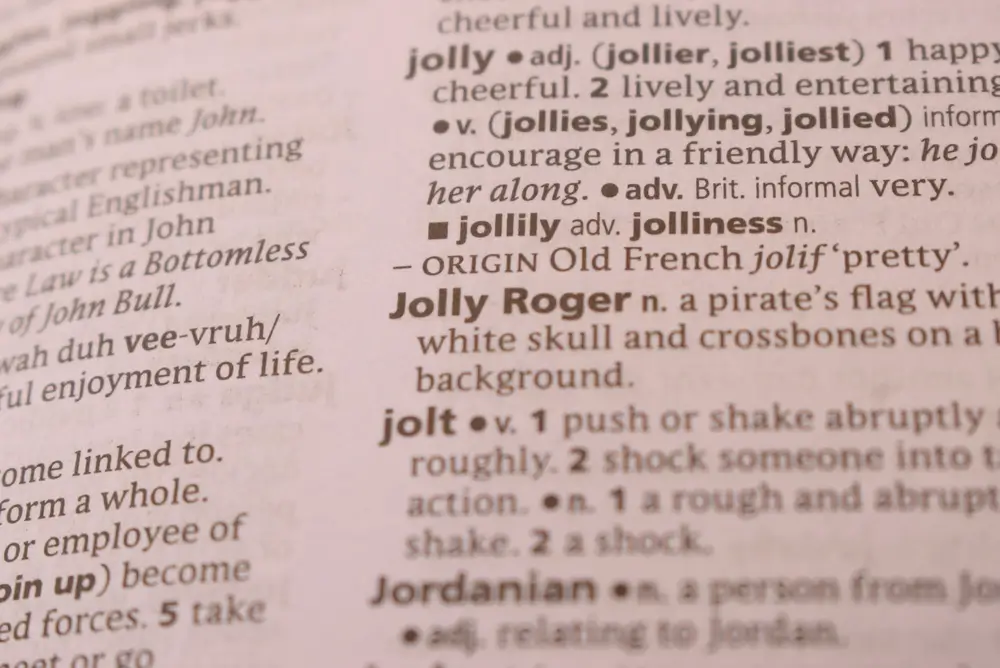
If you are preparing to enlist, the Word Knowledge subtest deserves more attention than most candidates give it. It looks simple on the surface, just picking the right meaning of a word, but it carries real weight in the score that decides whether you qualify and what jobs you can choose. This guide explains what the subtest measures, how it is timed and scored, and the study and test-taking methods that actually move the needle.
What Is the ASVAB Word Knowledge Subtest?
Word Knowledge, often shortened to WK, is the part of the ASVAB that measures your ability to recognize words in context and identify accurate synonyms. It tests vocabulary, but it also tests how well you understand the nuances of language, the small differences in meaning that separate one word from a near miss.
 ASVAB Test Prep · All Military BranchesReady to Pass the ASVAB?
Official subtest drills (AFQT, CAT-ASVAB), timed practice tests, score calculators and detailed step-by-step explanations.
The subtest is one of ten that make up the full ASVAB, according to the official ASVAB program. The others are General Science, Arithmetic Reasoning, Paragraph Comprehension, Mathematics Knowledge, Electronics Information, Auto Information, Shop Information, Mechanical Comprehension, and Assembling Objects. Word Knowledge pairs with Paragraph Comprehension to form the verbal side of your score, which is why the two are often discussed together.
What makes the subtest distinct is that it rewards understanding over rote memorization. The questions ask you to see how a word behaves in different settings, to spot the closest synonym, and to read fine distinctions in meaning. The vocabulary itself leans practical. The Marine Corps officer-candidate review material notes that the words come largely from terms used in military and professional environments rather than obscure academic language, so the skill you build here maps onto the communication you will actually do in service.
The Three Word Knowledge Question Types
The subtest uses three primary question formats, and knowing them in advance removes a lot of surprise on test day.
The most common by far is the synonym question. You are given a word and asked to choose the option closest in meaning. These reward direct vocabulary knowledge and a feel for how words relate to one another.
Next come context-based questions. Here a word appears inside a sentence, and you determine its meaning from the surrounding information. These blend reading comprehension with vocabulary, since you have to extract meaning from sentence construction rather than from the word alone.
Least frequent is the antonym question, which asks you to identify the opposite meaning. Antonyms show up less often than synonyms and context items, so most of your preparation should center on the first two formats. Every question is multiple-choice with four options.
The official ASVAB website publishes sample items that show the synonym format clearly. "Antagonize most nearly means" has the answer provoke, and "Wilted most nearly means" has the answer limp. A context example reads, "His record provides no reason for apprehension," where the intended meaning is anxiety. These samples are a good reference point for the level of vocabulary you should expect.
How Many Questions and How Much Time You Get

The number of questions and your time limit depend on which version of the test you take.
On the CAT-ASVAB, the computer adaptive version, the Word Knowledge section contains 16 questions to be answered in 8 minutes, the count reported consistently across the major ASVAB practice references. That works out to roughly 30 seconds per question. On the paper-and-pencil version, the P&P-ASVAB, the subtest contains 40 questions with an 11-minute time limit, according to the Marine Corps officer-candidate review material, which separates the paper format from the adaptive one.
The 30 seconds per question on the CAT-ASVAB is the figure that should shape your strategy. It is enough time to read a short item carefully, but not enough to stall on a single hard word. The goal is steady movement: read, decide, answer, and move on. The tight time constraint is exactly why the test rewards efficient answering, completing every item without sacrificing accuracy. Building speed through timed practice matters as much as building vocabulary, because the clock is part of the challenge on both the CAT-ASVAB and the P&P-ASVAB.
How Word Knowledge Affects Your AFQT Score
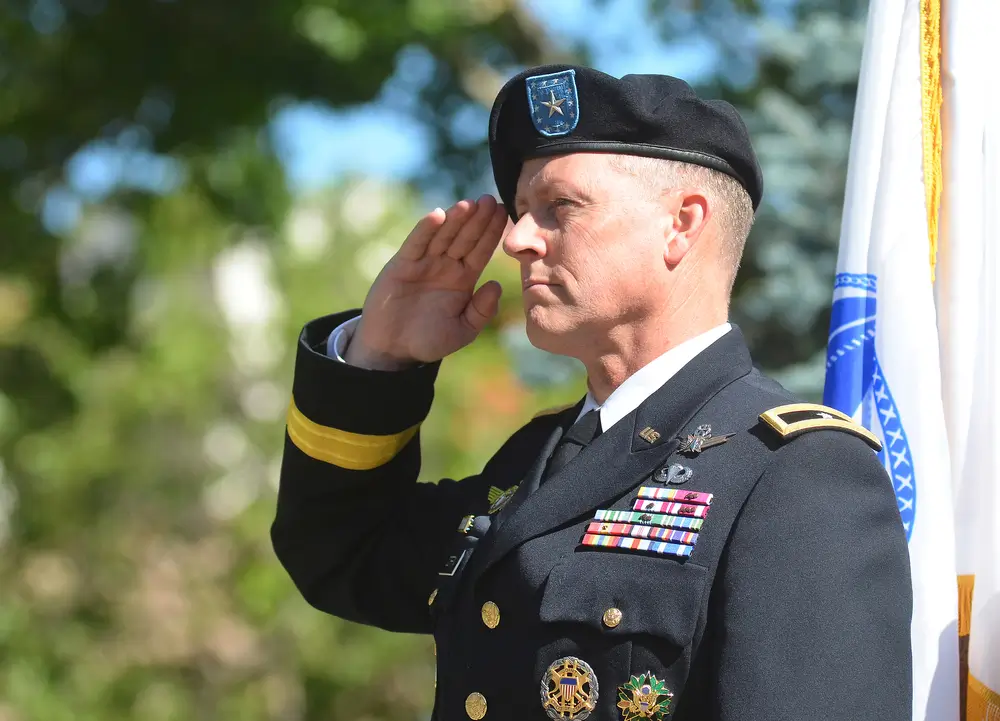
This is the reason WK matters more than its short length suggests. Together with Paragraph Comprehension, it forms the Verbal Expression (VE) component of the AFQT. ASVAB references consistently put the VE score at 50% of your total AFQT score, which means half of the number used to decide your enlistment eligibility comes from how you handle words.
Your raw WK score, the count of correct answers, is converted into a scaled score. That scaled score feeds into VE, and VE feeds into the AFQT composite. Because the verbal half is weighted so heavily, a weak WK performance can drag your composite below the minimum needed to enlist, or it can close off occupational specialties that require higher scores. A strong WK performance does the opposite, lifting your composite and widening your options. According to ASVAB tutor resources, a good score on this section is required for a range of military jobs, from journalist roles to firefighter roles.
AFQT scores are reported as percentiles, which is why a single number can be confusing at first. A score of 77 means you performed better than 77% of the reference group, so it is a strong result that comfortably clears entry requirements. Most branches set their minimum AFQT somewhere in the range of 31 to 36, so a 77 sits well above the line and opens access to a wide set of occupational specialties. A score of 70 is also well above average. It places you in the Category II band, roughly 65 to 92, and most branches require minimums far below it, so it provides solid eligibility and broad access to military occupational specialties. The majority of enlistees land somewhere between 31 and 65.
A useful caution: WK is only one piece of the AFQT. Your final composite blends multiple subtests, so a single strong or weak section does not decide the outcome on its own. It does, however, count for a large share through the VE component.
ASVAB Test Prep · All Military BranchesReady to Pass the ASVAB?Official subtest drills (AFQT, CAT-ASVAB), timed practice tests, score calculators and detailed step-by-step explanations.
Decoding Words with Roots, Prefixes, and Suffixes
You will not know every word on the test. That is expected, and it is where word structure becomes your best tool. Roots, prefixes, and suffixes drawn from Latin and Greek let you break an unfamiliar word into recognizable parts and make an educated guess.
Common Latin prefixes include pre- (before), post- (after), anti- (against), pro- (forward), de- (down or away from), and re- (again). Greek prefixes include auto- (self), bio- (life), geo- (earth), mono- (one), poly- (many), and syn- (together). Suffixes carry meaning too: -ology signals a field of study, -tion or -sion an action or state, -ible or -able the capacity for something, -ment a state or condition, -ness a quality, and -ful fullness of something. Put these together and a word like antitoxin resolves on sight: anti- (against) plus the root toxin (poison) gives a substance that counteracts poison.
The tables below collect the high-frequency affixes worth memorizing first.
Common Prefixes for ASVAB Word Knowledge
| Prefix | Meaning | Example |
|---|---|---|
| un- | not | unhappy, unclear |
| re- | again | redo, rebuild |
| pre- | before | preview, prepay |
| dis- | not, opposite | disagree, disappear |
| mis- | wrong | mistake, misunderstand |
| anti- | against | antisocial, antibody |
| sub- | under | submarine, subway |
| super- | above, beyond | superhuman, supernatural |
Common Suffixes for ASVAB Word Knowledge
| Suffix | Meaning | Example |
|---|---|---|
| -able/-ible | capable of | readable, visible |
| -ful | full of | helpful, beautiful |
| -less | without | helpless, careless |
| -ness | state of being | happiness, darkness |
| -ment | action or result | movement, payment |
| -tion/-sion | act or state | action, decision |
| -ly | in what manner | quickly, happily |
| -er/-or | one who | teacher, actor |
Root word analysis works the same way. Take abnegate. The root negate means to deny the existence of something, and the prefix ab- means away from. Combine them and abnegate means to turn your back on or reject, which makes deny the correct answer. You did not need to have seen the word before. You only needed to read its parts. This kind of decoding turns a blank into a reasoned choice, which is exactly what you want when the clock is running.
Reading Context Clues and Eliminating Wrong Answers
When a word appears inside a sentence, the sentence is usually telling you what it means. Reading the full sentence before and after the target word reveals the semantic direction, and that often lets you predict the meaning before you even look at the options.
Consider this item: "The professor did his best to appear universally erudite, even when asked questions about subjects he knew little about." The phrase "even when asked questions about subjects he knew little about" signals that erudite means learned, so scholarly is the answer. Civil, progressive, and amoral have nothing to do with knowing a lot. Another example: "She displayed fortitude in finishing the race despite the pain in her foot." Finishing through pain points to toughness, so courage fits. Speed does not, since a sore foot suggests she ran slower, and vulnerability is the opposite of what the sentence describes.
Process of elimination is the other half of smart answering, and it works even when you are unsure. Start by removing options with clearly different meanings, obvious opposites, or unrelated definitions. Then cut homonyms and similarly spelled words that carry distinctly different meanings. If two plausible answers remain, choose the one that matches the word's primary or most common definition rather than a secondary or archaic sense. The Marine Corps review material makes the same point: striking out the answers you know are wrong raises your odds on every remaining choice. Even a guess between two options beats a guess among four.
Common Traps to Avoid on Word Knowledge
Well-prepared candidates still lose points to a handful of recurring traps. Knowing them in advance is half the defense.
One trap is the secondary definition. A familiar word can be used in a less common sense, and if you grab the everyday meaning you may miss the one the question intends. Read all four options before committing.
Negation traps catch candidates who skim past a prefix. Negative prefixes like un-, dis-, and mis- reverse a word's meaning, and overlooking them flips your answer to the opposite of what is correct. Slow down enough to catch them.
False cognates form a third pitfall, words that sound or look similar but mean something different. Recognizing a word's sound is not the same as knowing its definition, and confusing two similar-looking words is a frequent error.
The last is simple rushing. The clock pressures you to move fast, but speed at the cost of accuracy is a poor trade. A related habit is reaching for the longest or most complicated option. More often than not the simpler synonym is correct, so resist the pull toward the fancy answer. With context items, lean on the sentence rather than your gut, but verify against real vocabulary knowledge, since surrounding text can occasionally point toward a meaning that does not match the actual word.
How to Study for the Word Knowledge Subtest
Effective preparation is less about cramming long word lists and more about building vocabulary you genuinely understand.
Start with common words, and be clear about what that means. Common words are not the ones everyone supposedly knows. They are words you have heard, while watching the news or reading a book, but cannot quite define or use yourself. Those are the highest-value targets, because they sit right at the edge of your active vocabulary.
Use a simple three-step method to learn each new word. First, can you define it? Second, do you know other words that mean the same thing? Third, can you use it in several sentences of your own? Memorizing a definition you never use tends to fade within days. Putting the word to work makes it stick.
Reading widely is one of the most natural ways to build vocabulary, since it exposes you to words in context rather than in isolation. Novels, newspapers, and technical articles all help, and words encountered in real sentences are easier to remember than entries on a flashcard. That said, flashcards and study apps are useful for systematic drilling, especially for the military and technical terms that appear on the exam. Combining contextual reading with focused practice covers both depth and breadth.
Finally, practice under time pressure. Knowing words does you little good if you cannot recall them in 30 seconds. Timed practice tests build the speed you need alongside accuracy, and a good practice tool will score you instantly and explain each error so you can see exactly which question types and word categories are your weak spots. Use those results to direct your study toward the areas that will gain you the most points, then retest to confirm the improvement.
Sample Vocabulary You Might See
The fastest way to calibrate your level is to look at the kind of words the subtest favors. Below is a representative set with concise synonyms, the format you will face most often.
Onerous means difficult. Disparate means different. Candor means honesty. Contrived means fake. Clandestine means covert. Fetid means putrid. Instigate means to initiate. Ephemeral means fleeting. Abrogate means to repeal. Empirical means observational. Deference means respect. Apathetic means emotionless. Camaraderie means companionship.
Other words worth knowing include stealth (furtiveness), stern (strict), salvage (rescue), negate (neutralize), incisive (keen), disdain (scorn), diffident (timid), implausible (improbable), eloquent (articulate), and pallid (pale). The vocabulary also spans broad categories: character traits such as audacious, brusque, and conscientious; legal and political terms such as accord, caucus, and insurgent; emotional states such as apprehensive, irate, and chagrined; and abstract concepts such as efficacy, lucidity, and nexus. If a fair share of these feel unfamiliar, that tells you where to focus.
Why Strong Word Knowledge Pays Off Beyond the Test
The value of a high WK score does not stop at qualification. A solid command of language signals an ability to process detailed information, which is exactly what jobs built on clear communication, critical thinking, and attention to detail demand. Careers in communications, law, and teaching draw heavily on these skills, but so does any role that involves decoding technical manuals, writing reports, or giving precise instructions.
Strong vocabulary, in other words, is not a one-time hurdle. It carries into training and into the daily work of service, where understanding and being understood quickly can matter a great deal. Time spent building it is time invested twice.
Frequently Asked Questions
What does WK mean on the ASVAB?
WK stands for Word Knowledge. It is the ASVAB subtest that measures vocabulary through synonym recognition, antonyms, and word meaning in context, using multiple-choice questions.
What is the WK score on the ASVAB?
The WK score begins with the number of correct answers, which is converted into a scaled score. WK combines with Paragraph Comprehension to form Verbal Expression, and VE represents 50% of the AFQT.
Is a 77 a high ASVAB score?
The sources do not define one universal label for a score of 77; interpretation depends on the score type and the relevant military or occupational requirement. For WK, raw performance is converted into a scaled score and contributes to the AFQT through VE.
Is a 72 a good ASVAB score?
Whether 72 is sufficient depends on whether it is an AFQT score and on the qualification or occupational requirement being considered. The sources explain that AFQT is used for military eligibility, while WK is only one contributor through the VE component.
Is a 47 on the ASVAB good?
The sources do not establish a single universal cutoff for deciding whether 47 is good. Candidates should distinguish an AFQT result from a WK practice result and compare the official score with the applicable enlistment and job requirements.
How rare is a 70 on the ASVAB?
The provided sources do not give a score distribution or estimate how rare a 70 is. They explain how WK contributes to VE and how VE contributes to AFQT, so rarity cannot be inferred from a short WK quiz result.
How do you study for Word Knowledge on the ASVAB?
Use a three-step routine: define each word, list synonyms, and use it in multiple sentences. Add reading in context, root and affix analysis, elimination practice, and timed WK questions so that vocabulary knowledge becomes faster and more precise.
How many questions are on the ASVAB Word Knowledge subtest, and how long do you have?
On the CAT-ASVAB, the selected format is 16 questions in 8 minutes. On the paper ASVAB, the selected format is 35 questions in 11 minutes, so CAT pacing works out to about 30 seconds per question.
What are common Word Knowledge traps on the ASVAB?
Common traps include secondary definitions, similar-looking or similar-sounding words, negative prefixes that reverse meaning, and context clues that point toward an incorrect interpretation. Rushing and choosing an unnecessarily complicated answer can also reduce accuracy.
Sources
ASVAB Test Prep · All Military BranchesReady to Pass the ASVAB?Official subtest drills (AFQT, CAT-ASVAB), timed practice tests, score calculators and detailed step-by-step explanations.
ASVAB Assembling Objects: Format, Tips, and Practice Guide

ASVAB Electronics Information: Your Complete Study Guide