
Choosing a military branch starts with one number: your AFQT score. It decides which services will even consider you, and it shapes the jobs you can hold once you finish training. The same test serves every branch, but the bar to clear is different for each one.
This guide compares the ASVAB requirements across all branches so you know exactly what to aim for. You will see the minimum AFQT for high school graduates and GED holders, how each service turns your subtest results into job qualification, and why the "minimum" almost never matches the score that gets people accepted. Use it to set a realistic target before you start studying.
 ASVAB Test Prep · All Military BranchesWhich branch fits your score?
Take a free practice test to see where you stand against each branch's minimum score.
Understanding ASVAB Score Requirements Across Military Branches
The ASVAB, or Armed Services Vocational Aptitude Battery, is a timed multi-aptitude test developed and maintained by the Department of Defense. It is administered at more than 14,000 schools and Military Entrance Processing Stations (MEPS) nationwide. It does three things at once: it confirms whether you are eligible to enlist, it points to the branch that may suit you best, and it sets which military jobs you can hold after basic training or boot camp.
People often confuse two scores. The full ASVAB has ten subtests, but only four of them produce the AFQT (Armed Forces Qualification Test), which is the number every branch uses for enlistment eligibility. The AFQT comes from Arithmetic Reasoning, Mathematics Knowledge, and Verbal Expression (Word Knowledge plus Paragraph Comprehension counted twice). It is a percentile score, so a 65 means you scored as well as or better than 65 percent of a reference group, not that you answered 65 percent of questions correctly.
A minimum AFQT of 31 lets you enlist in most branches, but each service sets its own floor. The Army requires 31, the Navy 31, the Marine Corps 31, the Air Force 31, and the Coast Guard 32. These differences reflect the distinct missions and staffing needs of each branch rather than a difference in the test itself.
| Military Branch | Minimum AFQT Score |
|---|---|
| Air Force | 31 |
| Army | 31 |
| Coast Guard | 32 |
| Marine Corps | 31 |
| Navy | 31 |
Beyond the AFQT, individual jobs add their own requirements. Each MOS (Military Occupational Specialty) draws on composite scores, also called line scores, that combine specific subtests. Technical and specialized roles lean on stronger results in areas such as Mathematics Knowledge, Electronics Information, or Auto and Shop Information. The better your ASVAB score, the broader your options, and a very high score can open a wide array of jobs, some carrying special pay and bonuses.
The takeaway is simple. Meeting your branch minimum gets you in the door, but the score you actually want depends on the career you are after.
Air Force ASVAB Requirements: The Highest Selectivity Standard
The Air Force sets its minimum AFQT at 31 for high school graduates. A handful of high school graduates may be accepted with a score as low as 31, but they are the rare case rather than the norm. Depending on recruiting demand, a recruiter may ask you to come back once you reach 50 or higher.
The published minimum understates how competitive the branch really is. Published data indicate that about 70 percent of those accepted for an Air Force enlistment score 50 or above on the AFQT. That single statistic explains why "easy to get into" is a poor description of the Air Force, even though its floor matches the Coast Guard's.
The picture is stricter still for GED holders. It is nearly impossible to join the Air Force without a high school diploma, and only about half of one percent of annual Air Force enlistments come from GED holders. A GED applicant needs a higher mark: the Air Force sets 50.
Jobs in the Air Force are identified by an AFSC (Air Force Specialty Code). To match people to roles, the branch breaks your subtest results into four qualification areas: General (G), Mechanical (M), Administrative (A), and Electrical (E), often shortened to MAGE. Each area combines a different set of subtests, so two recruits with the same AFQT can qualify for very different jobs.
| Qualification Area | ASVAB Subtests |
|---|---|
| G — general | Verbal expression (WK plus PC) and arithmetic reasoning (AR) |
| M — mechanical | Mechanical comprehension (MC), general science (GS) and two times auto and shop information (AS) |
| A — administrative | Numerical operations* (NO), coding speed* (CS) and verbal expression (WK plus PC) |
| E — electrical | Arithmetic reasoning (AR), mathematics knowledge (MK), electronics information (EI) and general science (GS) |
Technical, cyber, and aviation roles raise the bar on Electronics Information and Mechanical Comprehension, which usually need to reach 50 or above. Specific positions push higher: Cyber Warfare Operations (1B4X1) requires a General score of 64, and many maintenance roles sit in the high range of the Mechanical area.
Army ASVAB Requirements: Flexibility and Opportunity

The Army keeps the lowest entry bar among the major branches, requiring a minimum AFQT of 31 to enlist. That floor makes it the most accessible starting point, but the more useful number is 50. Published data indicate that Army recruits generally need an AFQT of at least 50 to qualify for enlistment bonuses, so the gap between eligible and rewarded is real.
Flexibility extends to education as well. The Army is the most accommodating branch for GED holders, with some recruitment years allowing up to 15 percent of recruits to enter without a high school diploma, more than any other service. The Army also lets recruits with a college degree enter at the E-4 pay grade.
After you test, the Army converts your results into ten calculations it calls line scores. These help the service decide which MOS you qualify for. They cover Clerical (CL), Combat (CO), Electronics (EL), Field Artillery (FA), General Maintenance (GM), General Technical (GT), Mechanical Maintenance (MM), Operators and Food (OF), Surveillance and Communications (SC), and Skilled Technical (ST).
| Line Score Code | Line Score Name | Formula |
|---|---|---|
| CL | Clerical | VE+AR+MK |
| CO | Combat | AR+CS+AS+MC |
| EL | Electronics | GS+AR+MK+EI |
| FA | Field Artillery | AR+CS+MK+MC |
| GM | General Maintenance | GS+AS+MK+EI |
| GT | General Technical | VE+AR |
| MM | Mechanical Maintenance | NO+AS+MC+EI |
| OF | Operators and Food | VE+NO+AS+MC |
| SC | Surveillance and Communications | VE+AR+AS+MC |
| ST | Skilled Technical | GS+VE+MK+MC |
The GT score carries a lot of weight, since it combines verbal and arithmetic results and gates many advanced roles. High-demand technical jobs sit well above the enlistment floor. A Cyber Operations Specialist (17C) needs a GT of 110 and an ST of 112, while a Special Forces Recruit (18X) needs a GT of 110 and an SC of 100.
Navy ASVAB Requirements: Balancing Standards and Specialization

Active-duty Navy enlistment requires a minimum AFQT of 31. Navy Reserve enlistment requires the same minimum of 31.
Education rules tighten the path for non-graduates. A GED applicant must score at least 50 on the AFQT, must have no drug use on record, and must supply at least three references from influential members of the community, with most police involvement beyond minor traffic offenses disqualifying the application. College experience can raise the entry pay grade up to E-3.
The Navy translates subtest results into rating-specific composite scores, and the technical ratings set some of the highest bars in any branch. The most demanding is the nuclear track: published data indicate the Navy Nuclear Electronics Technician rating requires AR+MK+EI+GS of 252 or higher, which also makes it one of the most technical paths available.
| Job Title | Composite Score Required |
|---|---|
| Aviation Electronics Technician | 210 EL |
| Culinary Specialist | 90 VE+AR |
Policy here has shifted recently. In 2022 the Navy began piloting a program allowing applicants in the 10th to 30th percentile to qualify if they meet minimum line scores, a response to a recruiting shortfall. The standard active-duty floor is 31, the same threshold that applies to Reserve programs, with the temporary pilot reaching lower.
Marine Corps ASVAB Requirements: Elite Standards and Limited Flexibility
The Marine Corps requires a minimum AFQT of 31. Exceptions exist but are tightly controlled: very few waivers are granted, around one percent, for otherwise exceptionally qualified recruits scoring as low as 25. Treat that as a rare carve-out, not a backup plan.
Education standards are firm. The Marine Corps limits GED enlistments to no more than five percent per year, and those applicants must score at least 50 on the AFQT to be considered. The branch is also the least generous on advanced rank, offering a maximum of E-2 for college credit.
The Marine Corps uses five line scores to qualify recruits for jobs: Electronics (EL), Clerical (CL), Mechanical Maintenance (MM), General Technical (GT), and Skilled Technical (ST). The minimum line scores for selected roles include Administrative Specialist at CL 100, Aircraft Electrical Systems Technician at EL 105, and Intelligence Specialist at GT 110.
| Occupational Specialties | Subject Concerned |
|---|---|
| Electronics- EL | AR+ EI+ GS+MK |
| Clerical- CL | AR+ MK+ VE |
| Mechanical Maintenance- MM | AS+ EI+MC+NO |
| General Technical- GT | AR+ VE |
| Skilled Technical- ST | GS+MC+MK+VE |
Between the strict GED cap, the limited rank advancement, and the rarity of waivers, the Marine Corps rewards applicants who arrive with a solid score and a clear job target.
ASVAB Test Prep · All Military BranchesWhich branch fits your score?Take a free practice test to see where you stand against each branch's minimum score.
Coast Guard ASVAB Requirements
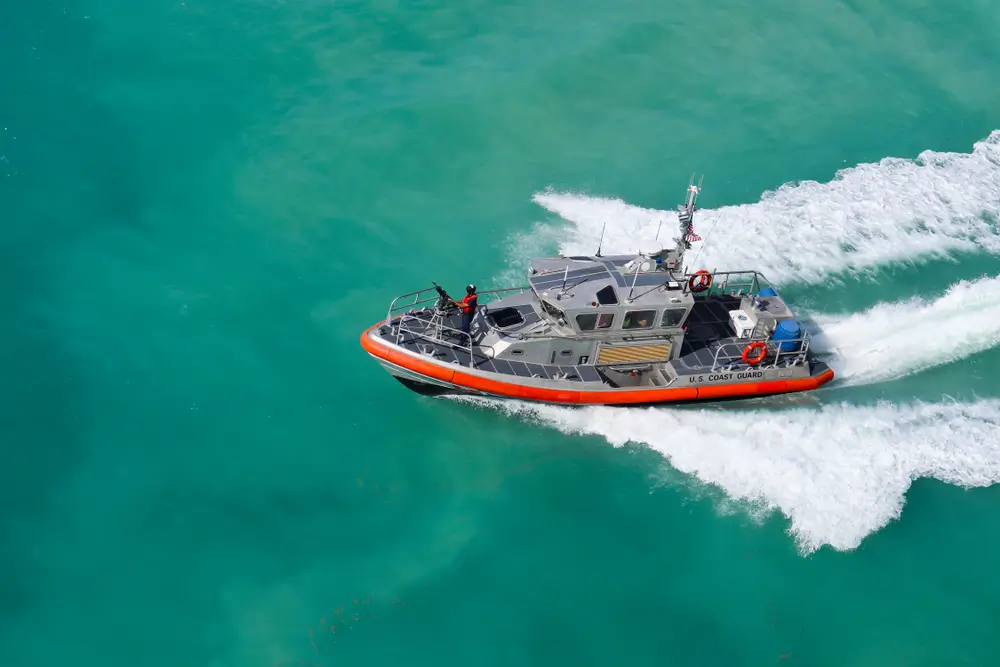
The Coast Guard sets a minimum AFQT of 32, just above the 31 floor most branches use. A waiver is possible if your line scores qualify you for a specific job and you are willing to enlist in that role. So while the AFQT floor is low, a strong score in the right area can open a side door.
Education requirements are equally demanding. 95 percent of Coast Guard recruits must hold a high school diploma. For GED holders the minimum is 47, with at least 15 hours of college credit recommended; a few sources cite 50, but 47 is the figure most consistently tied to the Coast Guard's GED pathway. Either way, the GED acceptance rate sits under five percent.
College work can also raise your starting pay grade. The Coast Guard offers advanced enlistment rank of E-2 for 30 college credits and E-3 for 60 credits, which is more generous than several other branches.
Specific jobs set their own composite thresholds. An Information Systems Technician needs a minimum Arithmetic Reasoning of 52 and a minimum overall score of 171, while a Port Security Specialist needs a minimum score of 101.
| Job Title | Composite Score(s) Required |
|---|---|
| Information Systems Technician | minimum AR 52, minimum overall score 171 |
| Port Security Specialist | minimum score of 101 |
How Higher ASVAB Scores Expand Career Opportunities and Advancement
Your AFQT falls into one of several categories, and that category tells you a lot about your prospects. The bands run from Category I at the top down to Category V, which is not eligible to enlist.
| Category | Percentile Range | Military Eligibility |
|---|---|---|
| Cat I | 93-99 | Highly eligible |
| Cat II | 65-92 | Eligible all branches |
| Cat IIIA | 50-64 | Eligible all branches |
| Cat IIIB | 31-49 | Eligible most branches |
| Cat IV | 10-30 | Limited eligibility |
| Cat V | 1-9 | Ineligible |
A Category I score (93-99) qualifies you for all branches and effectively every job, including competitive roles with better pay and benefits. Category IIIB (31-49), by contrast, mostly limits you to the Army and Marines and to high-volume jobs, and may require waivers elsewhere. The same test produces both outcomes, which is why the score you target should match the career you want.
The jobs themselves cluster by composite strength. Technical military roles typically require 70 or above in the relevant composite, medical positions need 60 or above with strong science results, and administrative roles call for 50 or above with strong verbal scores, while combat positions vary by branch.
Elite programs sit at the very top. Applicants scoring in the 90th percentile qualify for tracks such as Army Ranger School and Navy SEALs.
Branch Selection Strategy: Matching Your Score to Your Goals
Your score quietly narrows or widens your branch options before you make any other decision. A 31 qualifies you for the Army, Marine Corps, Navy, and the Air Force with a waiver, but it leaves the Coast Guard out entirely. Reach 36 and every branch is on the table, including the Space Force, which sets the highest minimum.
Branches also weight subtests differently, so the "right" preparation depends on where you want to serve. The Army leans on Verbal Expression, Arithmetic Reasoning, and Mechanical Comprehension with a strong focus on the GT score, the Air Force expects Electronics Information and Mechanical Comprehension at 50 or above for technical and aviation roles, and Navy technical and nuclear ratings need math-heavy composites above 65 to 70.
Age is the other gate that runs alongside score, and it varies sharply by branch and service type.
| Branch | Active Duty | Reserve | Guard | Academy |
|---|---|---|---|---|
| Air Force | 17-39 | 17-38 | 17-30 | 17-23* |
| Army | 17-35 | 17-35 | 17-35 | 17-23* |
| Coast Guard | 17-27 | 17-39 | n/a | 17-23* |
| Marine Corps | 17-28 | 17-28 | n/a | 17-23* |
| Navy | 17-39 | 17-39 | n/a | 17-23* |
| Space Force | Contact recruiter | Contact recruiter | Contact recruiter | Contact recruiter |
*As of July 1 of the year of entry.
The practical lesson is to think in terms of the career you want, not just the branch. Knowing the requirements for your target job helps guide your study far more than picking a branch alone. Pick the job first, find its composite requirement, and let that set your study target.
Common Misconceptions About Branch ASVAB Requirements
A few beliefs about branch difficulty do not survive contact with the numbers.
The first is that the Air Force is easy to join. The opposite is closer to the truth. About 70 percent of approved Air Force enlistees score 50 or above, and only about half of one percent of annual enlistments come from GED holders. A low minimum on paper does not mean a low bar in practice.
The second is that the Marine Corps has the hardest ASVAB requirement. By minimum score, that title goes to the Space Force at 36, above the Coast Guard's 32 and the 31 floor used by the Army, Air Force, and Marine Corps. The Marines are demanding in other ways, including their strict GED cap, but the AFQT floor is not the toughest.
A third myth is that a GED ends your chances. The Army accepts the most non-diploma recruits of any branch, and it even runs a program, Army Prep School, for individuals who hold neither a diploma nor a GED. The path is narrower and the score bar is higher, but it exists.
The final misconception is that meeting the minimum is enough. It rarely is. Nearly three-quarters of accepted Air Force recruits score above 55. Treat any published minimum as the floor for eligibility, not the score that earns an enlistment.
ASVAB Line Scores and Military Occupational Specialties
The AFQT decides whether you can enlist; line scores decide what you can do once you are in. Line scores, also called composite scores, combine multiple subtests to determine which jobs you are eligible to apply for, and each branch computes them in its own way depending on which subtests it draws on.
The Army uses the widest set, converting your results into ten line scores covering everything from Clerical to Skilled Technical. These scores tell the service which MOS options are open to you. Among them, the GT score is the one applicants watch most closely, since it pairs Verbal Expression with Arithmetic Reasoning and unlocks many technical and administrative paths.
The Air Force takes a different route, grouping subtests into four qualification areas, General, Mechanical, Administrative, and Electrical, that map to its AFSC structure. The Navy is more granular still, setting rating-specific composites that can run very high, as the nuclear track's 252 requirement shows. The Marine Corps lands in between with five line scores.
The common thread is that one test feeds many formulas. Knowing which formula your target job uses tells you exactly which subtests to prioritize.
Preparing for the ASVAB: Strategic Study Based on Your Branch Goals
Good preparation starts early. You should begin studying at least two months before your test date, set up a quiet study space, gather your tools, build a schedule, and take practice tests to find a baseline and pin down your weak spots.
How you study matters as much as how long. Dedicated daily sessions of even 30 to 60 minutes produce better results than occasional long sessions, because consistency strengthens problem-solving and eases test anxiety over weeks or months. The same sources argue for a personalized plan over a generic one, directing time toward the subjects with the most room to improve.
The smartest move is to study for your target job, not just the test. Understanding how specific subtests feed into a given MOS lets you focus on the areas that matter for both immediate eligibility and later advancement. In practice that means Air Force hopefuls drill Electronics Information and Mechanical Comprehension, Army applicants protect their GT score by sharpening Verbal Expression and Arithmetic Reasoning, and Navy candidates eyeing technical rates build up the math-heavy composites.
Everyone, regardless of branch, should still own the AFQT core: Arithmetic Reasoning, Mathematics Knowledge, Word Knowledge, and Paragraph Comprehension. A higher ASVAB score simply means more job options, several of which carry special pay and bonuses.
GED Holders and Non-Traditional Applicants: What You Need to Know
Every branch sorts applicants by education tier, and the tier you fall into shapes both your minimum score and your odds of selection. High school graduates (Tier 1) are preferred by all branches, eligible for the lowest ASVAB minimums and the widest job range, while GED holders (Tier 2) must clear higher minimums, typically 50 on the AFQT, and face tight quotas.
Those quotas vary a lot by branch. The Air Force admits fewer than one percent GED holders, while the Army allows up to 15 percent, with waivers rare across the board. The Coast Guard and Marine Corps sit near the bottom of that range at five percent or under.
There are real pathways for applicants who fall short of the standard floor. The Army runs a 90-day Future Soldier Preparatory Course for applicants scoring a minimum of 21, with a chance to retake the test, plus a 30-day program for those who scored between 31 and 49. College credits can also help, lifting your entry pay grade in several branches.
The reason for the stricter standard is not arbitrary. RAND research shows that high school graduates are more likely to finish training and stay in service than GED holders. Branches use tiered standards to prioritize the recruits most likely to succeed, not simply to fill quotas. If you are a Tier 2 applicant, the practical move is to aim well past 50 and gather any college credit you can.
ASVAB Score Changes and Policy Updates: Staying Current
Branch minimums are not fixed for life. They move with recruiting needs, which means the figure you read today may not be the figure in force when you test.
The clearest recent example is the Navy. In 2022 the Navy lowered its minimum AFQT from 31 to the 10th-to-30th percentile to address a recruiting shortfall, then reviewed and reassessed that decision the following year. The Army moves in the other direction during strong recruiting years. When recruiting and reenlistment rates run high, it has temporarily raised its qualifying AFQT minimum to as high as 50.
Eligibility rules outside the score itself can shift too. The TASC high school equivalency credential was retired in late 2021, which immediately changed ASVAB eligibility for people who held it.
The practical defense against all this churn is to verify current requirements close to your test date. You should confirm official branch requirements within 30 days of testing rather than relying on old advice or outdated prep materials. A recruiter is the most reliable source for the number that applies to you right now.
Frequently Asked Questions
Which branch needs the highest ASVAB score?
Recent comparison sources commonly identify the Coast Guard as having the highest minimum AFQT, often listing 40. Military.com lists 36, so the current cutoff is policy-sensitive and should be verified with a recruiter before you rely on it.
What branch has the easiest or lowest ASVAB requirement?
The Army is generally listed with the lowest major-branch minimum at 31 for high-school graduates. That threshold only addresses possible enlistment eligibility; the Army's MOS options still require specific line scores and other qualifications.
Is the ASVAB different for different branches, or is one branch's version easier?
The ASVAB is a common military assessment, but branches set different minimums and use different line-score or composite formulas for jobs. There is therefore no separate branch exam that is automatically easier; the difference is how each service applies the results.
What branches use the ASVAB, and is it required for all branches?
The sources describe the ASVAB as the assessment used across all U.S. military branches for enlistment and job matching. The Space Force's entry structure is different because it recruits directly from the Air Force, so candidates should verify its current process and benchmark separately.
What is a good ASVAB score for each branch, and what score is needed to enlist?
For high-school graduates, cited baseline figures include Army 31, Marine Corps 32, Navy 35, and Air Force 36. Coast Guard figures vary across the sources, while Space Force benchmarks are described as aligned with the Air Force; in every branch, the desired job may require higher line or composite scores than the branch minimum.
Is 70, 72, or 77 a high ASVAB score?
Yes. Scores of 70, 72, and 77 fall in Category II, which covers the 65–92 percentile range and is above average. The score still does not guarantee a particular MOS, AFSC, rating, or assignment because job-specific line scores also apply.
Is 47 a good ASVAB score?
A 47 falls in Category IIIB, the 31–49 range. It may clear several high-school-graduate branch minimums, but it is not automatically competitive for a preferred technical or specialized job, so the candidate should check the relevant line scores.
Is 27 a good ASVAB score?
A 27 falls in Category IV, the 10–30 range, and is below the common high-school-graduate minimums cited for major branches. A candidate at this level should focus on preparation and confirm whether any current preparatory or exception pathway applies rather than choosing a branch based on the score alone.
Sources
ASVAB Test Prep · All Military BranchesWhich branch fits your score?Take a free practice test to see where you stand against each branch's minimum score.

Space Force ASVAB Score Requirements: Minimums and Top Jobs