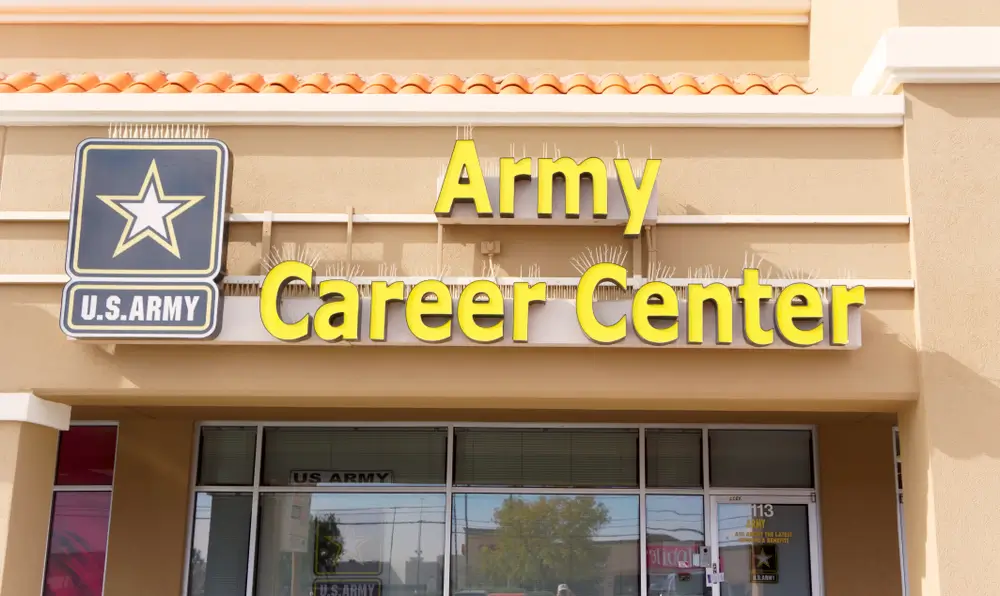
If your ASVAB score came back below the minimum for the branch you want, you have not necessarily run out of options. An ASVAB waiver is a formal way for the military to let you enlist despite a score that falls short of the standard cutoff. It exists because the people reviewing your file know a single test does not capture everything about a candidate.
This guide explains what an ASVAB waiver actually is, the different types you can request, the score you need branch by branch, and how the request moves through the system. It also covers the harder cases, including criminal record and felony waivers, since the rules there are stricter and easy to get wrong. Everything here is meant to help you decide your next concrete step.
 ASVAB Test Prep · All Military BranchesTry a free ASVAB test
Take a free practice test to see how close you are to your branch's minimum score.
What an ASVAB Waiver Is and How It Works
An ASVAB waiver is an official exemption that lets a candidate enlist, or apply for a specific Military Occupational Specialty (MOS), even though their test score does not meet the required minimum. The idea behind it is simple. Determination, leadership, physical fitness, and prior experience can sometimes make up for a low score on a single day.
One point trips up a lot of people. The ASVAB itself is not technically waiverable as a basic eligibility requirement. The Armed Services Vocational Aptitude Battery is a mandatory eligibility criterion for enlistment in any branch, established by 32 CFR 66.6(b). What a waiver really does is request consideration of an applicant whose score puts them in the below average range. Under that same regulation, a waiver is a formal request to evaluate the suitability of someone who may not otherwise qualify, granted only after a whole person review shows mitigating circumstances that justify it.
It also helps to know what an ASVAB waiver is not. It is separate from medical waivers, moral waivers for past legal issues, and age waivers. Those follow completely different processes and answer to different authorities. An ASVAB waiver addresses test performance and nothing else.
There is one more limit worth setting early. Even if you get a waiver for the AFQT minimum, you still have to meet the line score requirements for the MOS or rating you want. A waiver gets you through the front door. It does not open every room inside. Your job options with a borderline score will likely be narrower than someone who tested well above the cutoff.
The Three Types of ASVAB Waivers
Not all ASVAB waivers are the same, and the type you need changes both your odds and your timeline. There are three main categories: AFQT score waivers, line score waivers, and retest waivers.
| Waiver Type | Difficulty | Typical Timeline | Best For |
|---|---|---|---|
| AFQT Score Waiver | Hard | 1–4 months | Candidates within 5 points of minimum with strong compensating qualifications |
| Line Score Waiver | Moderate | 2–6 weeks | Those who qualify for enlistment but miss requirements for a specific MOS/rating |
| Retest Waiver | Easy–Moderate | 1–3 weeks | Those with documented issues during initial test (illness, anxiety, testing errors) |
An AFQT score waiver is the hardest to get. The AFQT is the sum of four ASVAB sections, and it is the primary number that decides whether you can enlist at all. The military treats it as a general indicator of trainability, so it does not give ground easily. These waivers tend to get approved only when the candidate brings something extra. According to one ASVAB tutor with more than a decade of experience, a former student who had worked as a licensed EMT for three years was approved with an AFQT score of 29, largely because of his medical background and maturity.
Line score waivers are far more common and easier to obtain. A line score is a composite built from several ASVAB sections, and it controls whether you qualify for a particular MOS. If you are eligible to enlist but miss the line score for the job you want, this is the waiver to pursue. The same tutor describes a student who fell four points short of the line score for Navy Corpsman and was approved in less than three weeks, helped by a phlebotomy certificate and recommendation letters from hospital volunteer work.
Retest waivers work differently. They let you retake the ASVAB sooner than the standard waiting period would normally allow, if you qualify. Use this carefully. Recruiters sometimes push students to retest, but retesting and scoring poorly again can hurt your future waiver chances. A second weak result is not a neutral event.
Speaking of timing, the standard retake schedule matters here. After your first ASVAB attempt you can retake the test after one calendar month. After a second attempt, it is another month. After a third attempt, there is a six month waiting period. ASVAB scores stay valid for two years from the test date, so you have some runway to plan around.
Minimum ASVAB Score by Branch
Before you can judge whether a waiver is realistic, you need to know the bar you are trying to clear. Each branch sets its own minimum AFQT score, and those numbers move slightly with recruiting needs.
| Military Branch | Minimum AFQT Score |
|---|---|
| Army | 31 |
| Navy | 31 |
| Marines | 31 |
| Air Force | 31 |
| Coast Guard | 32 |
A few of these deserve context. For the Army, the 31 minimum applies to high school diploma holders. The Coast Guard sits at 32, and that branch almost never grants waivers regardless. Space Force is set at 36 as well.
Education tier changes the math too. High school diploma holders count as Tier 1 and need a 31 for the Army. GED holders count as Tier 2 and typically need a 50, often with fewer enlistment slots available. The diploma versus GED gap is one of the biggest factors in whether you even reach the conversation about a waiver.
Branches also differ sharply in flexibility. The Army is the most willing to work with low scorers and may accept an AFQT as low as 21 with an approved waiver, according to one recent prep site, though that floor is not confirmed by any regulatory source and should be treated as a best case rather than a promise. The Navy occasionally grants waivers for scores in the 28 to 30 range. The Air Force rarely approves ASVAB score waivers and stays very competitive. The Marines set their minimum at 31 and treat waivers as rare. The Coast Guard treats them as extremely rare.
Why the Army leads on approvals comes down to scale. It has the largest pool of applicants and can afford to extend waivers to candidates close to the cutoff. Even so, every approval still requires a strong case.
There is also a hard ceiling on how many low scorers any branch can take. The regulatory framework groups enlisted applicants by percentile, and the rules cap intake at the bottom.
| Score Range (Percentile) | Classification | Annual Enrollment Cap |
|---|---|---|
| 31% to 99% | Average to Above Average | No cap |
| 10% to 30% | Below Average | Maximum 4% of annual enlistments |
| 9% and below | Markedly Below Average | Not specified |
According to a reference citing DOD Instruction 1145.01, no more than 4% of annual enlistments can come from the 10 to 30 percentile band. That cap is part of why a low score competes against a limited number of slots, and why timing and recruiting demand matter so much.
How to Request an ASVAB Waiver, Step by Step
The waiver process is not a form you submit yourself. It runs through your recruiter and up the chain of command. Knowing the sequence helps you prepare the right things at the right time.
Start with your recruiter. They review your scores and your overall qualifications and decide whether a waiver is worth pursuing. Be honest and direct about your situation, explain why you want to serve, and stay open to MOS flexibility. A candidate willing to take a job the branch actually needs is easier to advocate for.
Next, build a strong package. The documents you bring do most of the persuading.
| Document | Importance | Pro Tip |
|---|---|---|
| High School Transcripts | Essential | Highlight any upward grade trends or strong math/science performance |
| Professional Certifications | High Impact | EMT, CNA, IT certs, CDL—anything relevant to your desired MOS |
| Employment Records | High Impact | Shows reliability; long tenure at one job is better than many short stints |
| Letters of Recommendation | High Impact | Best from employers, coaches, or community leaders—not family |
| Leadership Documentation | Moderate | Eagle Scout, team captain, club president, volunteer coordinator |
| Fitness Test Scores | Moderate | Especially important for Marines; shows commitment and discipline |
| Personal Statement | Moderate | Brief, genuine explanation of why you want to serve—not a sob story |
Strong qualifications carry real weight here. Exceptional physical fitness, relevant work experience, leadership from ROTC, JROTC, or a community role, and college credits all strengthen the case. So do technical or healthcare certifications tied to the MOS you are after.
Once your packet is ready, your recruiter submits it through their chain of command, usually to the recruiting battalion or district commander for review. This is not instant. Expect anywhere from a few weeks to a couple of months. Do not waste that window. Use it to study for a possible retake so you are ready if the answer is no.
Finally, you wait for the decision, which comes back through your recruiter. If approved, you move forward with enlistment, though your MOS options may be narrower. If denied, you have two realistic paths: retake the ASVAB with better preparation, or look at a branch with a lower minimum. There is no formal appeal process for a denied waiver. The decision is final for that submission, but nothing stops you from raising your score and enlisting without a waiver at all.

What Makes a Waiver More Likely to Be Approved
Approval is never automatic, and the same file can succeed or fail depending on a handful of factors. Understanding them lets you focus your effort where it counts.
How close your score is to the minimum matters most. Candidates with approved waivers typically scored within 5 points of the cutoff. A 29 stands a real chance. A 15 does not. The smaller the gap, the easier the case is to argue.
Recruiting demand is the second big lever. When a branch is short on people or short in a specific role, it leans toward approving waivers to hit its numbers. The same low score that gets rejected in a strong recruiting year can clear in a lean one. This is outside your control, but it explains why approval rates swing over time.
Your overall profile fills the gap the score leaves. Most candidates who got waivers brought value added qualifications beyond the test, such as professional certifications, specialized training, relevant work history, or clear leadership. Eagle Scout, volunteer firefighter, and long tenure at one employer all signal the kind of reliability boards want to see.
As one veteran ASVAB tutor puts it:
The ASVAB is very important, but it is only a snapshot of your life on a single day. Waivers are available to recognize that snapshots do not always show the whole picture.
One more factor is easy to underrate. Your recruiter's effort can decide the outcome. They are the one who submits the package and pushes it forward, and some recruiters fight hard for an approval while others barely try. If yours is not engaged, that alone can sink an otherwise viable application. Needing additional waivers, such as a medical or moral waiver, also makes the ASVAB waiver harder to land, since the file gets heavier to defend.
ASVAB Test Prep · All Military BranchesTry a free ASVAB testTake a free practice test to see how close you are to your branch's minimum score.
Criminal Record and Felony Waivers
Many people who need an ASVAB waiver also carry something on their record, so it helps to understand how conduct waivers work. A moral conduct waiver is a formal exemption that lets someone with a criminal record or adverse adjudication enlist despite being otherwise ineligible. Under Department of Defense Instruction 1304.26, the Army is required to limit the entry of people likely to become disciplinary cases, security risks, or threats to good order and morale, which is the reason these waivers exist and the reason they are scrutinized.
A moral conduct waiver becomes necessary when an applicant has one major misconduct offense, meaning a felony, or two misconduct offenses, meaning misdemeanors. It is also triggered by a pattern of misconduct, shown either by one misconduct offense plus four non-traffic offenses, or by five or more non-traffic offenses. The trigger is the volume and severity of the record, not any single label.
Some offenses cannot be waived under any circumstances. According to a guide from a firm specializing in military defense, the non-waiverable list includes anyone currently under civil restraint such as probation, parole, or incarceration; anyone convicted of domestic violence under the Lautenberg Amendment; convictions for rape, sexual abuse, sexual assault, incest, or any sex offense requiring registration; trafficking, selling, or distributing narcotics including marijuana; more than one felony conviction; one felony plus three or more other convictions; five or more misdemeanor convictions; three or more DWI or DUI convictions in the past five years; and anyone previously separated from the military under dishonorable conditions.
The Lautenberg Amendment deserves its own note. It bars anyone convicted of a domestic violence misdemeanor from possessing firearms, and since firearm handling is part of many military roles, such a conviction is disqualifying without a path to waiver.
Which Felonies Can Be Waived
Not every felony ends the conversation. Whether a felony is waiverable depends on the nature of the offense, the sentence, and the branch's standards. The split between waiverable and non-waiverable is fairly consistent across sources.
| Offense Category | Waiverable Status | Key Criteria |
|---|---|---|
| Murder and Manslaughter | Non-Waiverable | Severity of offense |
| Rape and Sexual Assault | Non-Waiverable | Severity of offense |
| Armed Robbery | Non-Waiverable | Weapon involvement |
| Drug Trafficking | Non-Waiverable | Military drug policy |
| Child Abuse/Exploitation | Non-Waiverable | Protection of vulnerable populations |
| Non-Violent Theft | Waiverable | Rehabilitation demonstrated |
| Fraud and Forgery | Waiverable | Time elapsed, rehabilitation |
| Drug Possession | Conditionally Waiverable | Rehabilitation, time elapsed |
| Simple Assault | Conditionally Waiverable | Severity, weapon involvement |
| Property Crime | Waiverable | Evidence of rehabilitation |
The pattern is clear. Violent felonies, sexual offenses, drug trafficking, and crimes against children are treated as fundamentally incompatible with military service and are not waiverable across branches. Non-violent property crimes, financial offenses like fraud and forgery, and drug possession as distinct from trafficking can be considered when the applicant shows genuine rehabilitation.
For any waiverable felony, the military looks for real evidence of change. That means completion of all court-ordered sentences, a stable employment history since release, positive character references, and a demonstrated commitment to lawful conduct. Time also weighs heavily. More recent convictions are less likely to be approved than ones well in the past.
The documentation is heavier than for a score waiver. A felony waiver request typically includes a self-signed memorandum detailing the offense, supporting records such as police reports and court dispositions, any honors or awards, and reference letters. For a major misconduct offense, a General Officer level endorsement and a Moral Waiver Case Summary are mandatory.
Authority also rises with severity. Only a recruiter can start a moral waiver, and you have no automatic right to have one processed. Recruiting battalion commanders approve waivers for non-traffic and misconduct offenses for Regular Army and Reserve applicants, state adjutants general handle Army National Guard applicants, and only the G-1 Director of Military Personnel Management may authorize waivers for major misconduct offenses.
Expunged Records and the Duty to Disclose
A common and costly mistake is assuming an expunged or sealed record no longer exists for military purposes. It does. Even if a conviction was expunged, vacated, sealed, or pardoned under state law, the Army still requires you to disclose the underlying offense, and a waiver may still be needed.
The reason is jurisdictional. Expungement is a state remedy. It stops background check companies from reporting a record, but it does not erase records held by federal agencies like the FBI. Federal regulation, specifically Title 32, Chapter V, Section 571.3, requires applicants to disclose all sealed, expunged, or juvenile records even when state law treats them as cleared.
The penalty for hiding any of this is severe. Failure to disclose, or giving false information, is a federal offense. Lying to a recruiter can lead to a fraudulent enlistment charge and potential jail time, and it results in permanent disqualification. By contrast, there is no penalty for being honest up front. Recruiters cannot help you conceal or minimize an offense, and any attempt to do so is fraud. The smart move is full disclosure, since an expunged record can actually help a waiver by showing a court already viewed you as rehabilitated.
Approval Rates and Timelines by Branch
Where you apply changes your odds as much as what is on your record. The branches sit on a clear spectrum from flexible to strict.
| Service Branch | Strictness Level | Typical Felony Policy |
|---|---|---|
| Army | Most Flexible | Approves waivers for rehabilitation cases |
| Navy | Moderate | Selective approval for non-violent offenses |
| Marine Corps | Moderate | Similar to Navy standards |
| Air Force | Strict | Limited approval, security concerns |
| Coast Guard | Most Strict | Rarely approves, law enforcement role |
| Space Force | Moderate-Strict | Aligns with parent services |
The Army approves the most moral waivers. The Navy and Marines sit in the middle, approving less serious offenses case by case when rehabilitation is shown. The Air Force is described as the hardest branch to get a waiver from, with high standards and a deep applicant pool; the students who did get Air Force waivers usually held technical certifications or security clearances that reduced training costs. The Coast Guard is the toughest of all. One experienced tutor worked with only two students pursuing Coast Guard waivers over twelve years, and neither was approved.
Timelines depend heavily on the waiver type. Conduct waivers processed at the Army G-1 level have an approximate processing time of 12 to 16 weeks, according to the U.S. Army Recruiting Command. Line score waivers move much faster, usually two to six weeks, while AFQT score waivers tend to run one to four months. Medical waivers take the longest of all.
| Waiver/ETP Type | Approval Authority | Approximate Processing Time |
|---|---|---|
| Age ETP | Warrant Officer Recruiting Company | 4-6 weeks |
| AFS ETP | Warrant Officer Recruiting Company | 4-6 weeks |
| ETS Waiver | Warrant Officer Recruiting Company | 4-6 weeks |
| Prerequisite Waiver | Warrant Officer Recruiting Company | 4-6 weeks |
| Reapplication ETP | Army G-1 | 8-12 weeks |
| Medical Waiver/Medical Review | The Surgeon General | 12-16 weeks |
| AFT ETP | Army Deputy Chief of Staff, G-3/5/7 | Varies |
| Tattoo ETP | Warrant Officer Recruiting Company | 4-6 weeks |
| Conduct Waiver | Army G-1 (or General Officer for major offenses) | 12-16 weeks |
Timing your submission is just as important as the documents. A complete waiver packet must be submitted no less than 6 weeks before the board deadline, according to the U.S. Army Recruiting Command. However, while standard waivers follow this six-week rule, major misconduct offenses should also be submitted within the same 6-week lead time to allow for the mandatory General Officer level endorsement and Army G-1 processing. Miss that window and your packet does not get considered for that board.
Common Mistakes That Sink Waiver Applications
A surprising number of denials come down to avoidable errors rather than the offense or score itself. Knowing them in advance saves time you may not have.
The first mistake is incomplete or careless disclosure. Some applicants explain too little about an offense, others bury the point in irrelevant detail, and many fail to disclose their full criminal or medical history at all. Boards reward a clear, complete account and punish anything that looks like concealment.
A second pattern is failing to take ownership. Applications that blame the court system or shift responsibility tend to be disapproved. The waiver authority is looking for accountability, genuine rehabilitation since the offense, and a sincere desire to serve. Beyond the offense type and count, reviewers weigh education status, ASVAB score, employer references, and real community involvement that is not court-mandated. Applicants who show humility and own their past tend to do better.
The third mistake is weak paperwork. Thin documentation and low-quality character references are common reasons for disapproval. Letters from employers, coaches, or community leaders carry more weight than letters from family.
The last mistake is giving up too early. Some candidates wait until after a bad score to even ask about waivers, assume approval and skip retest prep, or quit instead of trying a different recruiter or branch. The chain of command can decline to process a waiver at any level, including your own recruiter, so persistence and the willingness to seek another advocate genuinely matter.
Should You Pursue a Waiver or Retake the ASVAB?
For a low AFQT score, the waiver is not always the smartest move. Often, retaking the test is the cleaner path, especially since the waiver process usually takes longer than the one month wait before a retake anyway.
| Your Situation | Retest | Waiver | Why |
|---|---|---|---|
| Scored 10+ points below minimum | ✓ | ✗ | Large gaps rarely get waiver approval; focused study can close it |
| Scored within 5 points of minimum | ~ | ✓ | This is the waiver sweet spot—especially with strong qualifications |
| Had test-day issues (sick, anxious) | ✓ | ~ | A clean retest under normal conditions may solve everything |
| Have relevant certifications/experience | ~ | ✓ | Strong qualifications are exactly what waiver boards want to see |
| Need to ship out quickly | ✗ | ✓ | Retesting requires wait time + study; waivers can sometimes move faster |
| Practice tests show big improvement | ✓ | ~ | Proven improvement means a higher score is within reach |
A waiver makes sense when your score is within 5 points of the minimum, your overall profile is strong, you lack time to retest, and your recruiter is optimistic. Retaking is the better call when you scored more than 10 points below the cutoff, the bad result had a clear cause like illness or nerves, and you have three to six months to prepare.
There is good news if you choose to retest. The ASVAB measures skills and knowledge that respond well to practice, unlike tests of raw cognitive ability. Arithmetic Reasoning and Math Knowledge, two of the four AFQT components, improve sharply with targeted review, and Word Knowledge responds well to vocabulary building. Study guides, practice tests, prep courses, and focused work on your weakest sections are often a more reliable route than betting on an approval that is never guaranteed.
In some cases, running both tracks at once is the strongest play. While your waiver is under review, keep studying, keep your documentation current, and prepare for either outcome. If the waiver is denied, you are ready to test again the moment the waiting period allows.
Frequently Asked Questions
Can you get a waiver for the ASVAB?
Possibly, but the terminology needs a qualification. One regulatory interpretation says the ASVAB itself is not waiverable, while recruiting sources use “ASVAB waiver” for a branch-level exception or consideration when an applicant misses the minimum AFQT; any request is case-by-case and not guaranteed.
Why do people get ASVAB waivers?
People pursue one after scoring below a branch’s minimum AFQT or when their score does not qualify them for a desired role. A branch may consider a request when recruiting needs, a near-threshold score, or compensating qualifications make the applicant worth reviewing.
What does “waiver required ASVAB” mean?
It generally means the score is below the branch’s normal AFQT threshold and the application needs an exception review. It does not guarantee enlistment and does not automatically waive the line-score requirements for a particular MOS or rating.
How hard is it to get an ASVAB waiver?
Low-score waivers are difficult and never guaranteed. Prospects are generally better when the gap is small and the candidate has strong education, fitness, leadership, work, or technical credentials; the Army is more flexible than the Air Force and Coast Guard.
Does the Army do ASVAB waivers?
Yes, the Army processes waiver requests, including moral waivers for certain criminal records and score-related exception requests. The recruiter can assess and submit a case, but a command-level authority makes the decision, and approval is not automatic.
Can you get a waiver for a felony in the Army?
Sometimes. One felony can require an Army moral conduct waiver, and some nonviolent offenses may be considered after court obligations are complete and rehabilitation is documented; serious or categorically barred offenses cannot be waived.
Can a felon join the military in 2026?
Possibly, but there is no blanket answer based only on the word felony or the year 2026. Eligibility depends on the offense, number of convictions, sentence, time elapsed, rehabilitation, and branch policy; violent, sexual, trafficking, and certain domestic-violence offenses are major barriers.
Can I join the Air Force with a felony charge?
A pending felony charge generally prevents enlistment processing, and the Air Force is among the stricter branches for waiver decisions. If the case is resolved and the offense is potentially waiverable, a recruiter—not the applicant alone—must submit the complete package for command review.
What felonies disqualify you from the Army?
Examples identified by the sources include murder or manslaughter, rape or sexual assault, armed robbery, violent weapons offenses, drug trafficking, child abuse or exploitation, and certain domestic-violence convictions. Multiple felony convictions and active civil restraint can also make an applicant non-waiverable under Army or service-specific rules.
How do you get a felony waiver to join the military?
Start with a recruiter and disclose the full record. Gather certified court and police records, proof of completed sentences or probation, rehabilitation evidence, character references, and a personal explanation; the recruiter submits the packet through the chain of command, which issues the decision.
Sources
ASVAB Test Prep · All Military BranchesTry a free ASVAB testTake a free practice test to see how close you are to your branch's minimum score.

ASVAB Cheat Sheet: Math Formulas & Scores to Memorize

How to Study for the ASVAB: Step-by-Step Strategy Guide