
If you just got your ASVAB (Armed Services Vocational Aptitude Battery) results back, the number that matters most is your AFQT (Armed Forces Qualification Test) score, and it falls on a scale from 1 to 99. That range confuses many people. A 50 does not mean you got half the questions right, and a 99 is not a perfect score in the usual sense.
This guide explains what the ASVAB score range actually means, how the numbers work, the minimum for each branch, and what counts as a competitive result.
 ASVAB Test Prep · All Military BranchesReady to Pass the ASVAB?
Official subtest drills (AFQT, CAT-ASVAB), timed practice tests, score calculators and detailed step-by-step explanations.
What the ASVAB Score Range Means: 1 to 99
The AFQT is reported as a percentile score between 1 and 99. According to the official ASVAB program, that percentile shows how you compare to a nationally representative sample of 18 to 23 year olds who took the test in 1997, the PAY97 reference group. A 50 means you performed at or above 50 percent of that group. It is a ranking, not a count of correct answers.
This is the key idea behind the scale: your score always describes you relative to other people, not a fixed answer key. The Department of Defense adopted the PAY97 population in 2004, replacing a 1980 sample, and those results still reference that 1997 group.
The ASVAB produces two kinds of numbers. Each subtest receives a standard score with a fixed mean of 50 and a standard deviation of 10, so a standard score of 40 is one standard deviation below the mean and a 70 is two above it. These per-subtest numbers feed your job eligibility, while the percentile score drawn from four subtests decides whether you can enlist at all.
Behind the scoring sits Item Response Theory. The official program uses the three-parameter logistic model, or 3PL model, to estimate each test-taker's ability and keep every version of the test on one scale. That is what lets the computerized version adapt to your level while keeping results comparable.
The average ASVAB score is 50 by design, since the scale centers on the median of the reference group. About half of test-takers earn a standard score of 50 or higher, fewer than 16 percent reach 60, and most land between 30 and 70. According to the U.S. Army Recruiting Command Center, roughly 60 percent of Army recruits score 50 or higher.
The Eight AFQT Score Categories
The Department of Defense sorts every score into one of eight categories. These categories drive enlistment quotas and eligibility, so they often say more about where you stand than the raw number.
| AFQT Category | Score Range |
|---|---|
| I | 93–99 |
| II | 65–92 |
| IIIA | 50–64 |
| IIIB | 31–49 |
| IVA | 21–30 |
| IVB | 16–20 |
| IVC | 10–15 |
| V | 1–9 |
Two categories carry legal weight. Under 10 U.S.C. § 520, Category V applicants (1 to 9) are barred from enlisting. Category IV applicants (10 to 30) can enlist but cannot exceed 20 percent of any branch's annual accessions. The statute keeps a minimum aptitude floor across the force.
The categories also map roughly onto the population.
| Category | AFQT range | ~% of population |
|---|---|---|
| Category I | 93–99 | ~7% |
| Category II | 65–92 | ~28% |
| Category IIIA | 50–64 | ~15% |
| Category IIIB | 31–49 | ~19% |
| Category IV | 10–30 | ~21% |
| Category V | 1–9 | ~9% |
Candidates in Category IIIA and above, meaning 50 or higher, become eligible for enlistment incentives. That is why a 50 is treated as the practical line between a minimal score and a useful one.
How the AFQT Score Is Calculated
The full battery has nine subtests.
| Subtest Code | Subtest Name | Description |
|---|---|---|
| GS | General Science | Life science, earth and space science, and physical science |
| AR | Arithmetic Reasoning | Solve basic arithmetic word problems |
| WK | Word Knowledge | Ability to understand the meaning of words through synonyms |
| PC | Paragraph Comprehension | Ability to obtain information from written material |
| MK | Mathematics Knowledge | Mathematical concepts and applications |
| EI | Electronics Information | Electrical current, circuits, devices and electronic systems |
| AS | Auto & Shop Information | Automotive maintenance and repair and wood and metal shop practices |
| MC | Mechanical Comprehension | Principles of mechanical devices, structural support and properties of materials |
| AO | Assembling Objects | How an object will look when its parts are put together |
Only four of them feed your AFQT. The formula is simple: it equals 2 × VE + AR + MK. VE is Verbal Expression, the sum of Word Knowledge and Paragraph Comprehension; AR is Arithmetic Reasoning; MK is Mathematics Knowledge.
Because Verbal Expression is doubled, reading and vocabulary count slightly more than math, while verbal and quantitative skills stay roughly balanced. The raw result then converts into the 1 to 99 percentile on your score sheet.
This matters for preparation. The five remaining subtests (General Science, Mechanical Comprehension, Electronics Information, Auto and Shop Information, and Assembling Objects) do not affect your enlistment score. They feed branch line scores instead. To clear the minimum, focus on Arithmetic Reasoning, Mathematics Knowledge, Word Knowledge, and Paragraph Comprehension first.

Minimum ASVAB Scores by Military Branch
Each branch sets its own minimum AFQT score, and those floors shift with recruiting demand. The figures below are current published minimums for high school diploma holders.
| Military Branch | Minimum AFQT (HS diploma) | Minimum AFQT (GED) |
|---|---|---|
| Army | 31 | 50 |
| Marine Corps | 31 | 50 |
| Navy | 31 | 50 |
| Air Force | 31 | 50 |
| Space Force | 36 | 50 |
| Coast Guard | 32 | 50 |
The Army, Marine Corps, and Air Force share the lowest floor at 31 for diploma holders. According to the official Air Force recruiting site, a 31 qualifies you with a diploma, while GED holders without at least 15 college credit hours need 50.
The Navy sets its active-duty minimum at 31. The Coast Guard sits just above that floor at 32, and the Space Force, the newest branch, requires 36, the highest of all, in line with its technical mission.
GED holders face a tougher bar everywhere, with a minimum of 50 across branches, often paired with college credit. One caveat: in 2022 the Navy piloted a program letting applicants in the 10th to 30th percentile enlist if they met specific line score formulas. It was set for re-evaluation after fiscal year 2023, so confirm its current status with a Navy recruiter.
ASVAB Test Prep · All Military BranchesReady to Pass the ASVAB?Official subtest drills (AFQT, CAT-ASVAB), timed practice tests, score calculators and detailed step-by-step explanations.
What Counts as a Good ASVAB Score
There is no universal good ASVAB score, because the test measures aptitude, not achievement. Nobody passes or fails. A good score is one that clears your branch minimum and unlocks the jobs you want.
A few benchmarks hold up. A 50 to 64 (Category IIIA) is solid and above average. A 65 or higher (Category II) is a standout that opens specialized positions, training programs, and officer track consideration. Above 80 qualifies for nearly any specialty, and above 90 is exceptional.
Specific ranges add context. A 31 to 49 (Category IIIB) clears the floor for the Army and several branches but limits competitive specialties and most incentives; the Army requires at least 50 for certain bonuses. The 60 to 75 band is reliable above-average performance that opens roles across every branch. Category I (93 to 99) is only about 7 percent of test-takers, so a score in the 90s is rare.
The job changes the target. A Navy Culinary Specialist needs a combined line score of just 88, while a role like Cryptologic Technician often demands composite scores of 90 or higher. The same number can be more than enough for one path and short of another.
The Highest ASVAB Score: What 99 Means and How Rare It Is
The maximum AFQT score is 99, and the ceiling has a simple cause: a percentile cannot reach 100, since that would mean outperforming everyone, including yourself. A 99 means you scored better than 99 percent of the 1997 PAY97 sample.
It is rare in practice, not only in theory. Most candidates land between 40 and 70, the population thins above 80, and it becomes very sparse above 90. People do earn a 99, but it sits at the far tail.
What it unlocks is broad but not unlimited. A 99 qualifies a recruit for nearly any branch and almost any specialty, a strong position at enlistment. Even so, individual jobs depend on line scores from specific subtests. A perfect result will not place you in a technical field if your Mechanical Comprehension or Electronics Information scores fall short. The AFQT is the gate; line scores are the keys to each door.
Line Scores and Composite Scores: What Determines Your Job
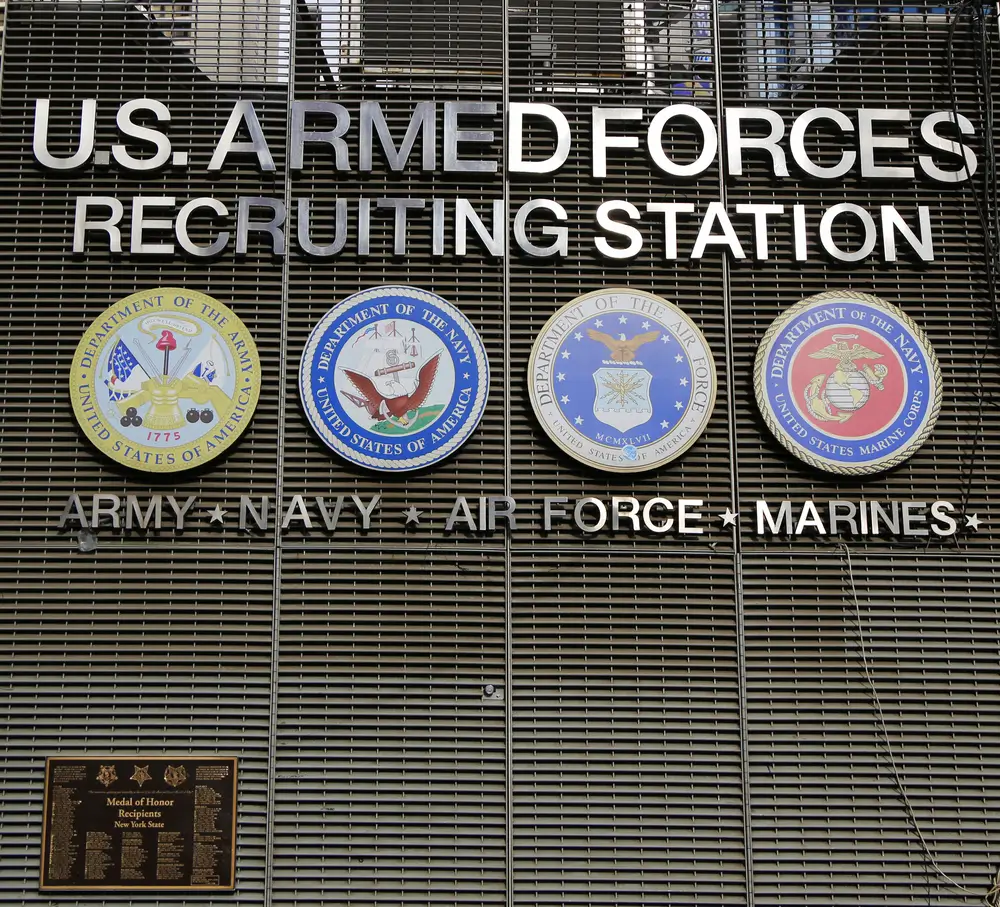
Your AFQT decides whether you can enlist. The Armed Forces Qualification Test does not decide what you do once you are in; line scores, also called composite scores, do that. Each branch combines different ASVAB subtests, then matches the result against each Military Occupational Specialty, or MOS.
The Army uses ten line scores: Clerical, Combat, Electronics, Field Artillery, General Maintenance, General Technical, Mechanical Maintenance, Operators and Food, Surveillance and Communications, and Skilled Technical. The Air Force uses a four-category system called MAGE: Mechanical, Administrative, General, and Electronics.
Requirements vary widely by job.
| MOS Code | Job Title | Minimum Line Score |
|---|---|---|
| 11B | Infantryman | CO: 87 |
| 18X | Special Forces Recruit | GT: 110 & SC: 100 |
| 17C | Cyber Operations Specialist | GT: 110 & ST: 112 |
| 25S | Satellite Communication System Operator | EL: 117 |
Higher line scores open the toughest fields. Roles such as cryptologic linguist, drone operator, and nuclear propulsion technician demand top-tier composite scores. The Navy SEAL pipeline requires one of two formulas: GS+MC+EI at 165, or VE+MK+MC+CS at 220. The Navy Nuclear Field is harder still, needing VE+AR+MK+MC+NAPT of 290 with NAPT at least 55, or AR+MK+EI+GS of 252. Strong scores also bring signing bonuses, advanced technical schools, and officer training consideration.
Improving Your Score and Retaking the Test
Most candidates can raise their score with focused preparation. Those in the upper ranges are rarely just gifted; they usually studied in a structured way. A common recommendation is to start at least two months before test day.
The efficient strategy follows the AFQT formula. Since only Arithmetic Reasoning, Mathematics Knowledge, Word Knowledge, and Paragraph Comprehension count toward eligibility, those four come first. Practice tests are the core tool, showing both the format and your weak spots.
Retaking is allowed on a fixed schedule. According to official Air Force and Army guidance, you wait one calendar month before a second attempt and six calendar months before a third or later attempt. Note that your most recent score, not your highest, is used for enlistment, so an unprepared retake can hurt you.
The Army also runs the Future Soldier Preparatory Course for applicants who fall short. A 90-day program covers scores of 21 and above, and a 30-day option with one retake covers scores from 31 to 49.
Score Validity and How the Test Is Given
ASVAB scores are valid for two years from your test date if you have not served before. Active members keep their scores throughout service, and validity for prior service members varies by branch. If your two years lapse before you enlist, you retest.
Most applicants take the computerized version. The CAT-ASVAB is given at a Military Entrance Processing Station, or MEPS, and runs about two hours. It adapts each question to your performance using the same Item Response Theory model behind the scoring, so the computerized version uses fewer questions than the paper test. Roughly 70 percent of applicants take this format; paper-and-pencil remains an option where the computer version is unavailable.
A third route is the PiCAT, an unproctored version you take at home with no time limit. Its results are not official until you verify them at a controlled site such as MEPS, and the PiCAT mirrors the structure and scoring of the CAT-ASVAB.
Students take a different path. The ASVAB Career Exploration Program runs from 10th grade up, and from 11th grade onward the score earned is valid for enlistment for two years. School scoring compares students to their grade level, while enlistment scoring compares applicants to the broader adult pool.
Frequently Asked Questions
What is a good ASVAB score?
There is no single good score for every applicant. The AFQT must meet the minimum for the desired branch, while line or composite scores determine whether the desired military job is available; 50 is the national midpoint and 65–92 is Category II, above average.
How good is a 70 on the ASVAB?
An AFQT of 70 means you performed as well as or better than 70% of the reference group. It falls in Category II, which spans 65–92, so it is clearly above average, although job qualification still depends on line scores and other requirements.
Is scoring a 40 on the ASVAB good?
A 40 is in Category IIIB and is above the published high-school-diploma minimums for the Army, Air Force, Navy, and Marine Corps in the supplied branch comparison; it also reaches the listed Coast Guard floor of 40. It is a qualifying-level score in that comparison, not a guarantee of a competitive job choice.
Is 50 a low ASVAB score, or is it average?
An AFQT of 50 is average because it places the candidate at the midpoint of the reference population, and it is not the same as answering 50% of questions correctly. For a high-school-diploma applicant, 50 is above the published minimum entry floors in the supplied branch table, but line scores still determine job options.
Is a 90, 93, or 94 a good or impressive ASVAB score?
Yes. An AFQT of 90 is a very high Category II score, while 93 and 94 fall in Category I, which runs from 93 to 99. These results place a candidate near the top of the reference distribution, but specialized jobs may still require particular line scores.
Is a 99 on the ASVAB good, and how rare is it?
A 99 is the highest possible AFQT percentile and means performance at or above 99% of the reference group. The supplied sources describe it as exceptionally rare or almost impossible, but they do not provide an official current percentage of test takers who earn 99; it also does not automatically satisfy every job-specific line-score requirement.
Are ASVAB scores such as 47, 72, and 77 good?
A 47 is in Category IIIB and places the candidate at or above 47% of the reference group, while 72 and 77 are Category II scores and clearly above average. Whether any of them is good enough depends on the branch, education credential, and line scores required for the desired job.
Are scores of 21, 23, 25, or 32 bad on the ASVAB?
Scores of 21, 23, and 25 fall in Category IVA, while 32 is in Category IIIB. A 32 reaches the published Army, Air Force, and Marine Corps high-school-diploma floors in the supplied sources but is below the listed Navy and Coast Guard floors; scores below a branch minimum may require a retake, waiver, or other pathway.
Can I get into the Air Force with a 31 ASVAB score?
According to the official Air Force page, high school seniors or graduates can meet the minimum AFQT requirement with a 31. GED holders must achieve 50, and meeting the AFQT minimum alone does not guarantee enlistment, a specific career, or fulfillment of the Air Force's other requirements.
Has anyone scored 100 or 110 on the ASVAB?
The AFQT cannot be 100 or 110 because its percentile scale ends at 99. A number such as 110 is likely a line or composite score, which uses a different calculation and can exceed 99; Army job tables, for example, include GT requirements of 110.
Sources
ASVAB Test Prep · All Military BranchesReady to Pass the ASVAB?Official subtest drills (AFQT, CAT-ASVAB), timed practice tests, score calculators and detailed step-by-step explanations.
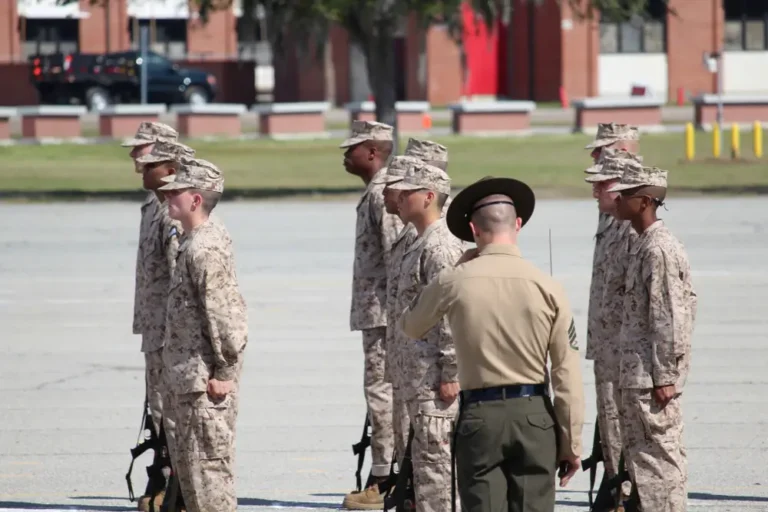
Marine ASVAB Score: Minimum AFQT, Line Scores & MOS Guide
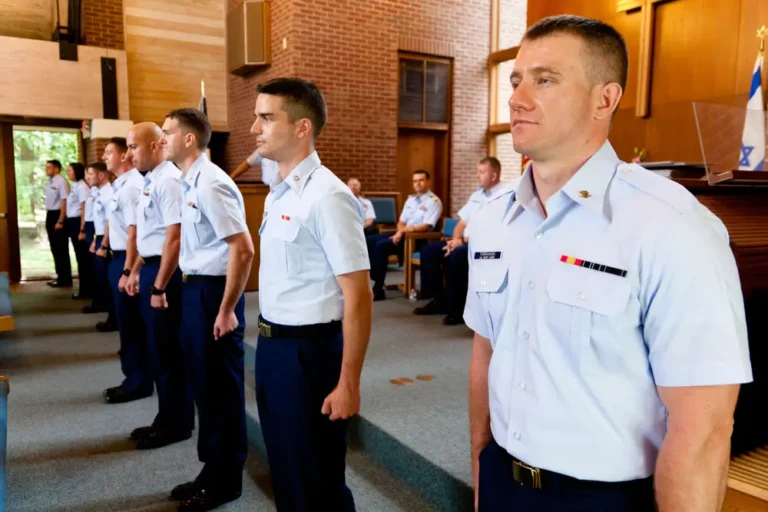
Coast Guard ASVAB Score: Minimums, Ratings & How to Prep