How the ASVAB Decides Which Military Jobs You Qualify For
Your ASVAB result does two separate things at once. It decides whether you can enlist at all, and it decides which specific jobs you can be assigned to. Reading your scores correctly starts with keeping those two questions apart.
The first number is the AFQT (Armed Forces Qualification Test) score. It is built from four subtests: Arithmetic Reasoning, Mathematics Knowledge, Word Knowledge, and Paragraph Comprehension. The AFQT is reported as a percentile from 1 to 99, so a 60 means you scored higher than 60 percent of the reference group. Every branch sets its own minimum to walk through the door.
 ASVAB Test Prep · All Military BranchesReady to Pass the ASVAB?
Official subtest drills (AFQT, CAT-ASVAB), timed practice tests, score calculators and detailed step-by-step explanations.
| Military Branch | Minimum AFQT (High School Diploma) |
|---|---|
| Army | 31 |
| Navy | 31 |
| Air Force | 31 |
| Marine Corps | 31 |
| Coast Guard | 32 |
| Space Force | 36 |
GED holders face higher bars. The Marine Corps and the Coast Guard, for example, both require a minimum AFQT of 50 for applicants without a high school diploma. The Space Force sets its enlistment minimum at 36; the 46 figure is the requirement for one career field, All Source Analyst, not for the branch.
Those minimums only make you eligible. They say nothing about which role you will fill. That second decision rests on line scores, also called composite scores. A line score combines several subtests into a single number tied to a family of jobs. The same raw test feeds many different composites, which is why two recruits with identical AFQT results can qualify for very different careers.
| Line Score | Formula |
|---|---|
| Clerical (CL) | WK + PC + AR + MK |
| Combat (CO) | WK + PC + AS + MC |
| Electronics (EL) | GS + AR + MK + EI |
| Field Artillery (FA) | AR + MK + MC |
| General Maintenance (GM) | GS + AS + MK + EI |
| General Technical (GT) | WK + PC + AR |
| Mechanical Maintenance (MM) | AS + MC + EI |
| Operators and Food (OF) | WK + PC + AS + MC |
| Surveillance and Communications (SC) | WK + PC + AR + AS + MC |
| Skilled Technical (ST) | WK + PC + GS + MC + MK |
Each branch builds these composites differently. The Army organizes results into ten line scores and is the only service that uses line scores to offer a guaranteed specific job to each new recruit, while others may guarantee a job or a broader aptitude area. The Navy and the Coast Guard lean on direct subtest combinations rather than a fixed set of named composites. The Air Force works from four categories: Mechanical, Administrative, General, and Electronic.
Knowing what each subtest measures helps, because your weak areas shape your line scores.
| Subtest | Description | Domain |
|---|---|---|
| General Science (GS) | Knowledge of physical and biological sciences | Science/Technical |
| Arithmetic Reasoning (AR) | Ability to solve Arithmetic word problems | Math |
| Word Knowledge (WK) | Ability to select the correct meaning of words presented in context and to identify the best synonym for a given word | Verbal |
| Paragraph Comprehension (PC) | Ability to obtain information from written passages | Verbal |
| Math Knowledge (MK) | Knowledge of high school mathematics principles | Math |
| Electronics Information (EI) | Knowledge of electricity and electronics | Science/Technical |
| Auto Information (AI) | Knowledge of automobile technology | Science/Technical |
| Shop Information (SI) | Knowledge of tools and shop terminology and practices | Science/Technical |
| Mechanical Comprehension (MC) | Knowledge of mechanical and physical principles | Science/Technical |
| Assembling Objects (AO) | Ability to determine how an object will look when its parts are put together | Spatial |
Army Jobs by ASVAB Score
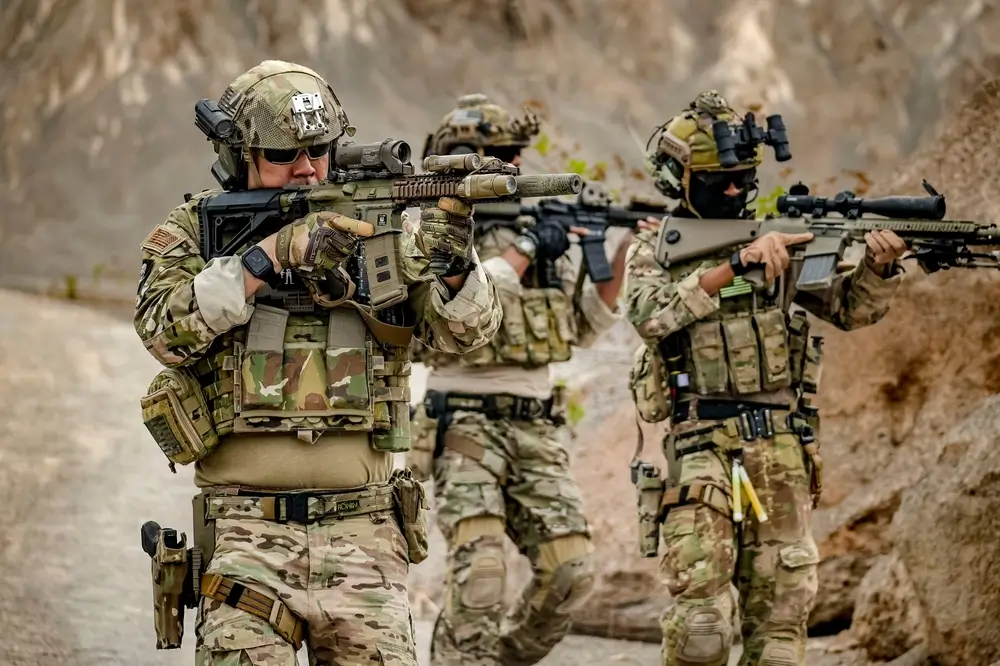
The Army ties every job to a Military Occupational Specialty (MOS), and each MOS carries its own line score requirement. The maximum AFQT is 99, the enlistment floor is 31, and from there your line scores set the menu.
Entry combat roles are among the most reachable. Infantryman (11B) needs a Combat score of CO:87, and Combat Engineer (12B) sits at the same CO score. Cavalry Scout (19D) and several other arms roles also open at CO:87, which makes the Combat line one of the more accessible thresholds.
Technical and cyber work climbs higher. Cyber Operations Specialist (17C) is one of the steepest, requiring both a GT score of 110 and an ST score of 112. The dual requirement is unusual and screens hard for candidates strong in both verbal-math and technical reasoning.
Medical and intelligence specialties cluster near the top of the ST scale. Combat Medic Specialist (68W) needs ST:101. Intelligence Analyst (35F) also needs ST:101, while Signals Intelligence Analyst (35N) requires ST:112. Linguist roles add a separate hurdle, the DLAB (Defense Language Aptitude Battery): Human Intelligence Collector (35M) calls for DLAB:107.
Elite and leadership tracks gather at GT:110. Special Forces (18X) opens there, as do the commissioned and warrant officer candidate paths (09S and 09W). A General Technical score of 110 is, in practice, the line that separates standard enlistment from the Army's most selective career fields, and those roles often come with larger enlistment bonus offers.
Marine Corps Jobs by ASVAB Score
Marine Corps jobs run on the same MOS logic, with GT, EL, MM, and CL doing most of the gatekeeping. The basic enlistment floor is an AFQT of 31 for high school graduates.
Infantry is the most accessible entry point. Rifleman (0311) requires a GT score of 80, and the basic infantryman track opens at that same level. Several other front-line roles, including Machine Gunner and Mortarman, sit in the same lower GT band on the most recent published tables.
Specialized infantry asks for more. Reconnaissance Man (0321) needs GT:105, one of the more demanding requirements for a ground combat role. Intelligence Specialist (0231) is higher still, at GT:110.
Aviation maintenance is a large field with a consistent bar. Helicopter and tiltrotor mechanic roles such as 6112 and 6172 require an MM score of 105, and that Mechanical Maintenance threshold repeats across most fixed-wing and rotary maintenance MOS codes.
Communications and avionics electronics sit at the top of the Marine line scores. Aviation Communication Systems Technician (5939) and the advanced communications technician roles in the 2811 family require an EL score of 115, the highest common Marine threshold and a clear signal that strong electronics and math results unlock the technical specialties.
ASVAB Test Prep · All Military BranchesReady to Pass the ASVAB?Official subtest drills (AFQT, CAT-ASVAB), timed practice tests, score calculators and detailed step-by-step explanations.
Navy Ratings by ASVAB Score
The Navy calls its jobs ratings and qualifies them through composite formulas built from specific subtest combinations. There is no single named line score table as in the Army; instead each rating lists its own formula.
The nuclear field sets the ceiling. Nuclear Propulsion Plant Operator roles (MMN, EMN, ETN) require AR+MK+EI of at least 252, or VE+MK+MC+CS of at least 222. This is the highest composite score requirement in the Navy and reflects the technical depth of running reactors at sea.
Electronics and technical ratings sit just below. Electronics Technician (ET) needs AR+MK+EI+GS of 222 or more, and the related fire control and cyber warfare ratings demand similar combinations.
Intelligence work runs through the Cryptologic Technician (CT) rating, which requires a GT score of 110. Special warfare keeps its own combinations: the Navy SEAL (SO) path requires GS+MC+EI of at least 165, or VE+MK+MC+CS of at least 220.
Not every rating demands high marks. Musician (MU) needs only the AFQT minimum of 31 and carries no line score criteria, and Culinary Specialist opens at a Verbal Expression plus Arithmetic Reasoning (VE+AR) total of 76. The spread shows how widely Navy options open up as your composite score climbs.
Air Force Jobs by ASVAB Score
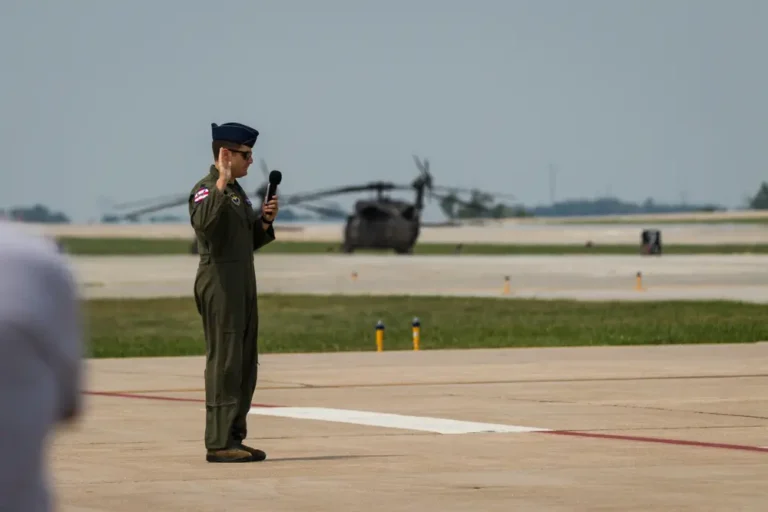
The Air Force maps each job to an AFSC (Air Force Specialty Code) and sorts those codes into four score categories: General, Administrative, Mechanical, and Electronic. Your subtest results decide which AFSC families you can enter.
General-category jobs cover a wide range. Security Forces (3P0X1) opens at a General score of 33, among the most accessible Air Force AFSC requirements, while Air Traffic Control Specialist (1C1X1) requires a General score of 55.
Elite rescue work is physically brutal but not the highest on paper. Pararescue (PJ) requires a General score of 44, a reminder that the toughest pipelines often gate harder on fitness and selection than on the written test.
Cyber roles are among the steepest AFSC requirements. Cyber Systems Operations (3D0X2) calls for an Electronic score of 70, or a General score of 64 depending on the source consulted. Mechanical AFSC codes such as aircraft maintenance qualify off the Mechanical composite instead.
Coast Guard Ratings by ASVAB Score
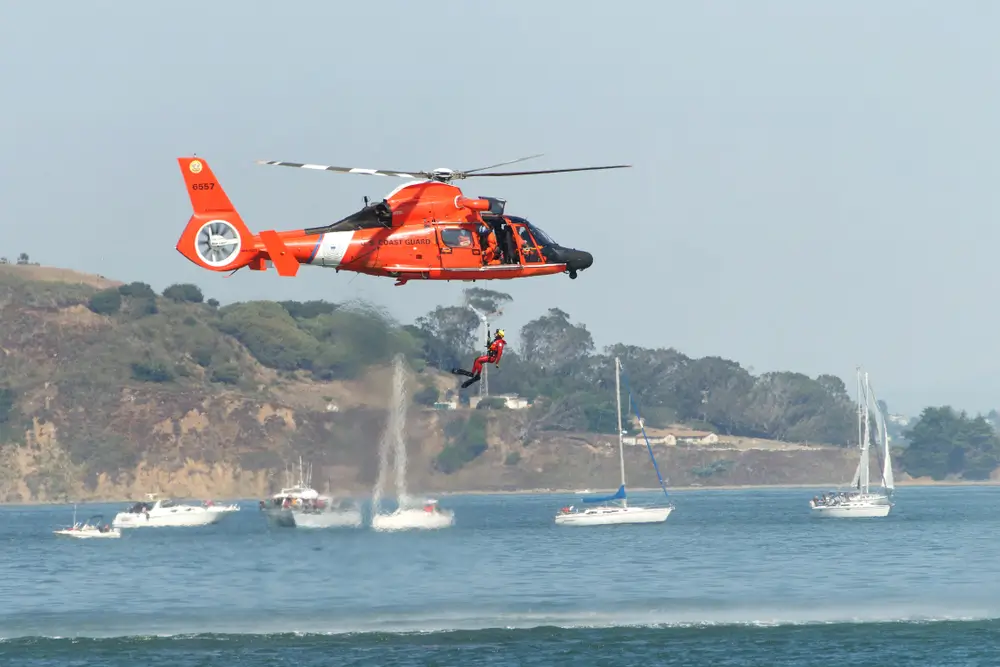
The Coast Guard sets a minimum AFQT of 32 for high school diploma holders, just above the 31 floor most branches use. What makes it hard to join is less the score than the size: the branch is small and mission-focused, so applicants often need a strong score just to secure a slot rather than simply to qualify.
| Rate Code | Rate Title | Minimum Combined Score | Additional Minimum Requirements |
|---|---|---|---|
| AET | Avionics Electrical Technician | 171 | |
| AMT | Aviation Maintenance Technician | 213 | Minimum AR: 52 |
| AST | Aviation Survival Technician | 162 | Minimum AFQT score of 65 |
| BM | Boatswain's Mate | 101 | |
| CS | Culinary Specialist | 106 | |
| DC | Damage Controlman | 152 | |
| DV | Diver | 104 | |
| EM | Electrician's Mate | 152 | Minimum AR of 52 |
| ET | Electronics Technician | 171 | Minimum AR of 52 or AFQT of 66 |
Aviation ratings are the most demanding. Aviation Maintenance Technician (AMT) needs a combined 213 with a minimum AR of 52, the highest in the table. Aviation Survival Technician (AST), the rescue swimmers, needs 162 plus an AFQT of at least 65. Gunner's Mate (GM) requires 208 according to recent published data.
Lower thresholds still exist. Maritime Enforcement Specialist (ME) qualifies on a Verbal Expression plus Arithmetic Reasoning combination, and entry roles such as Boatswain's Mate (BM) open around 101. Even so, a competitive applicant usually aims well above the floor.
Why Line Scores Matter More Than Your Total, and How to Raise Them
A strong AFQT gets you in the door, but line scores decide your options. Each service validates its own composites against on-the-job performance, then uses those numbers to match recruits to occupations. The practical takeaway is simple: figure out which composites feed the jobs you want, then concentrate your study there instead of spreading effort evenly.
The leverage points differ by goal. Mechanical and maintenance roles reward strong Mechanical Comprehension, auto and shop knowledge, and math. Electronics and technical ratings weight electronics information, general science, and math. Verbal-heavy composites like GT depend on Word Knowledge and Paragraph Comprehension. A few extra points in the right subtest can move you across a threshold and open a whole new category of MOS or rating.
If your scores fall short, you can retest. The waiting period is one calendar month before a second attempt, another month before a third, and six months between any further retakes. Your most recent result is the one that counts, and scores are not combined across attempts. Results also expire: an ASVAB score is valid for enlistment for two years, after which you must retest regardless of how well you originally did.
Most testing now uses the CAT-ASVAB, the computer-adaptive version, where question difficulty shifts based on your answers, which makes steady early accuracy important. Some applicants begin with the PiCAT, an alternative to the standard ASVAB. Whichever version you face, the same preparation works: study consistently, target your weakest subtests, take timed practice tests to get used to the format, and consider tutoring for math, vocabulary, or technical material before you sit the test again.
Frequently Asked Questions
What jobs can I get with my ASVAB scores?
Use the AFQT to check basic enlistment eligibility, then compare your branch-specific line or composite scores with individual job requirements. Examples include Army Infantryman at CO 87, Marine Corps Rifleman 0311 at GT 90, and Army Cyber Operations Specialist 17C at GT 110 plus ST 112. Meeting a threshold does not guarantee that the job is available.
Is a 25, 27, 33, or 47 a good ASVAB score?
These are percentile scores, not percentages of questions answered correctly. A 25 or 27 is below the listed minimums for the Army, Marines, Navy, and Coast Guard; 33 clears the selected Marine Corps minimum for high-school diploma holders but not the Navy or Coast Guard minimum; 47 exceeds the Coast Guard minimum but does not guarantee acceptance or a preferred rating. Confirm your situation with a recruiter.
Is a 70, 72, or 77 a high ASVAB score?
Yes, each score is well above the 50th percentile because ASVAB and AFQT results compare you with other test-takers. However, a high AFQT does not automatically qualify you for every military job: the branch will still check the relevant line scores, additional requirements, and job availability. Specialized jobs such as Army 17C also require particular combinations of line scores.
What jobs in the Army require a high ASVAB score?
Examples include Cyber Operations Specialist 17C, which requires GT 110 and ST 112, and officer candidate pathways that require GT 110. Intelligence and cyber specialties commonly sit above basic combat or support thresholds because they require stronger technical or analytical line scores.
What jobs can I get in the Marines with my ASVAB score?
Marine Corps jobs use MOS-specific line scores rather than the AFQT alone. Examples include Rifleman 0311 at GT 90, Reconnaissance Marine 0321 at GT 105, aircraft maintenance roles around MM 105, and advanced electronics roles at EL 115. Your recruiter must confirm current availability and all other qualifications.
What ASVAB score is needed for the Marines?
Using the selected current value in this brief, high-school diploma holders need a minimum AFQT score of 32 for Marine Corps enlistment, while GED holders generally need 50. That score only addresses basic enlistment eligibility; each MOS has its own GT, EL, MM, CL, or ST requirements.
What ASVAB score do I need for 0311?
Marine Corps MOS 0311 Rifleman requires a minimum GT line score of 90 in the selected current requirements. GT is separate from the AFQT, and meeting GT 90 does not guarantee assignment because availability, physical qualifications, security clearance, training slots, and Marine Corps needs can also apply.
Does the ASVAB apply to the Coast Guard?
Yes. The Coast Guard uses the ASVAB to determine AFQT enlistment eligibility and to match applicants with ratings through role-specific score requirements. The selected minimum is AFQT 40 for high-school diploma holders and 50 for GED holders, with higher thresholds for technical and competitive ratings.
What is a good ASVAB score for the Coast Guard?
An AFQT score of 50 or better is described as a good Coast Guard score, but higher is generally more competitive because the Coast Guard is selective and has limited rating slots. You must also meet the rating-specific score requirements rather than relying on AFQT alone.
What Navy jobs do I qualify for with my ASVAB score?
The Navy classifies jobs as Ratings and uses several possible combinations of ASVAB scores for different specialties. Examples include Electronics Technician with qualifying electronics, math, science, and arithmetic combinations, and Cryptologic Technician with a GT requirement of 110. Check the exact rating formula because some ratings offer alternative score paths.
Sources
ASVAB Test Prep · All Military BranchesReady to Pass the ASVAB?Official subtest drills (AFQT, CAT-ASVAB), timed practice tests, score calculators and detailed step-by-step explanations.
ASVAB Job Calculator: Match Your Scores to Military Jobs

Army Jobs by ASVAB Score: Full MOS Line Score Requirements