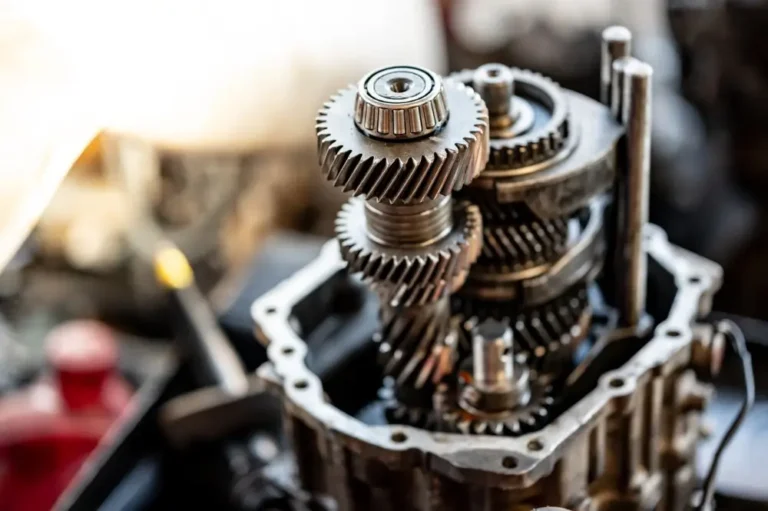
The Mechanical Comprehension subtest, usually shortened to MC, is the part of the ASVAB that checks how well you understand machines and physical forces. If you want a technical job in the military, such as vehicle mechanic, aircraft servicing, or engineering, this section carries real weight. This guide explains what the test covers, the formulas you need to know, and how to study so you walk in ready.
What Is the ASVAB Mechanical Comprehension Subtest?
The MC subtest measures your understanding of mechanical and physical principles. Most questions are multiple choice and come with diagrams or simple drawings of mechanical systems, so you read the picture and apply the right concept to find the answer.
 ASVAB Test Prep · All Military BranchesReady to Pass the ASVAB?
Official subtest drills (AFQT, CAT-ASVAB), timed practice tests, score calculators and detailed step-by-step explanations.
In this context, mechanics means the study of motion, energy, and forces. It is not just about knowing the name of a tool or a machine. The test is built to see whether you grasp what actually happens in basic mechanical situations, even when you do not know the technical term for it.
The subtest is not part of your AFQT score. Instead, it helps determine whether you qualify for specific jobs. If you want to rebuild tanks, service aircraft, or work in engineering roles, a strong MC result matters a great deal.
The content spans nine main areas: gears and gear systems, inclined planes and wedges, wheel and axle systems, hydraulics and pneumatics, simple electrical circuits, material properties, Newton's Laws of Motion and gravity, work, power, and energy, and fluid dynamics. The rest of this guide breaks the most important ones down.
Test Format: Questions, Time Limits, and Versions
The format depends on how you take the ASVAB. There are three versions, and the question count and timing change with each.
| Test Format | Number of Questions | Time Allotted |
|---|---|---|
| CAT ASVAB | 16 Questions | 20 Minutes |
| P&P ASVAB Exam | 25 Questions | 19 Minutes |
| PiCAT ASVAB | 16 Questions | Untimed |
On the computerized CAT-ASVAB you answer 16 questions in 20 minutes, which leaves a little over a minute per question. The CAT-ASVAB is adaptive, so the questions are arranged to grow harder as you go. Do not panic if the first few feel easy, because they are meant to warm you up before the tougher ones arrive.
The paper-and-pencil version is tighter. You get 25 questions in 19 minutes, roughly 45 seconds each, so the time pressure is greater. The PiCAT is the gentlest on timing, with 16 questions and no clock.
One rule applies across every version: calculators are not allowed. You handle all the math by hand, so solid mental arithmetic is part of the preparation.
Simple Machines: Levers, Pulleys, and Inclined Planes
Simple machines are the backbone of the subtest. The common ones are levers, pulleys, gears, screws, and wedges. Some prep sources note that springs are not counted as a simple machine, so be careful if that distinction appears in a question.
Levers come in three classes based on where the fulcrum sits. A first-class lever has the fulcrum in the middle, like a seesaw. A second-class lever has the load in the middle, like a wheelbarrow. A third-class lever has the effort in the middle. The position of the fulcrum sets the mechanical advantage. Move the fulcrum closer to the load and you need less force, but you apply it over a longer distance.
Lever questions often ask you to balance a load. Torque is the key idea here, calculated as force multiplied by distance from the fulcrum. If a 70 lb load sits 3 ft from the fulcrum and the effort acts at 7 ft, you set the two sides equal: 70 × 3 equals force × 7, so the effort needed is 30 lbs.
Pulleys reduce the force you need by spreading the load across rope segments. A block and tackle setup uses several pulleys together and needs at least two pulleys to be useful. A four-pulley system gives a 4:1 mechanical advantage. To lift a 100 kg object, which weighs about 1,000 N, you only apply 250 N, but you pull the rope four times the distance.
An inclined plane trades distance for force. By making an object travel a longer path, a ramp lowers the force needed to raise it to a given height. The mechanical advantage equals ramp length divided by platform height. Rolling a 370 lb barrel up a 13 ft ramp to a 4 ft platform gives a mechanical advantage of 3.25, and the effort works out to about 115.8 lbs.
The wheel and axle follows the same logic. Its mechanical advantage equals the radius of the wheel divided by the radius of the axle. A wheel with radius 10 paired with an axle of radius 5 has a mechanical advantage of 2.
Gears, Torque, and Rotational Mechanics
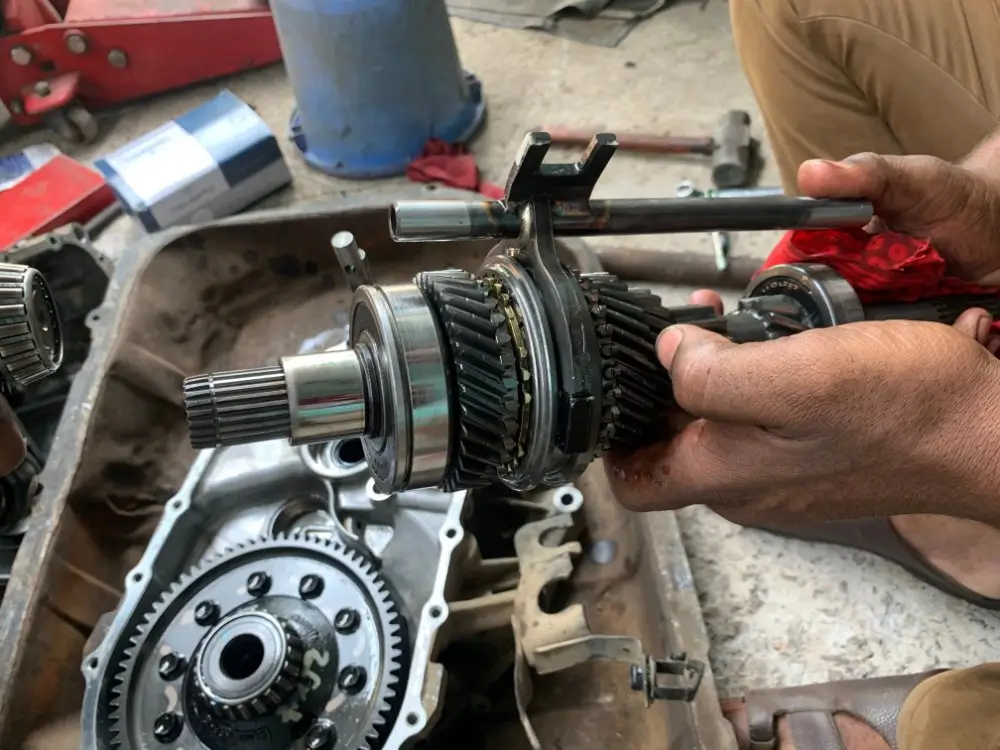
Gear questions test how connected gears change speed, torque, and direction. The gear ratio is the ratio of teeth on the larger gear to teeth on the smaller gear, and it expresses the mechanical advantage of the pair.
A 16-tooth gear meshed with an 8-tooth gear gives a gear ratio of 2:1, which means the smaller gear turns twice as fast as the larger one. A 12-tooth gear connected to a 9-tooth gear gives a ratio of 4:3.
In a gear train, the first gear is the driver gear, also called the input gear, and the last one is the driven gear. When a larger gear drives a smaller gear, rotational speed rises while torque drops. Torque is the twisting force on an object, and torque and speed always move in opposite directions. When one goes up, the other goes down.
Direction matters too. Meshed gears alternate their spin. If the first gear turns clockwise, the next turns counterclockwise, and the pattern continues down the train. A classic bicycle example shows the math: a 30-tooth pedal sprocket linked to a 10-tooth rear sprocket gives a 3:1 ratio, so 12 pedal turns spin the rear wheel 36 times.
Newton's Laws of Motion and the Forces Behind Movement
Newton's Laws of Motion run through much of the subtest, so know all three. The First Law, the law of inertia, says an object at rest stays at rest and an object in motion stays in motion unless an outside force acts on it. The Second Law links mass, force, and acceleration through F = ma, where acceleration rises with force and falls as mass grows. The Third Law states that every action has an equal and opposite reaction, which is why a wall pushes back when you push on it.
Gravity is the attraction between two masses, described by Fg = G(m1·m2)/r². The pull depends on the masses involved and the distance between them.
Friction is the force that opposes motion, always acting opposite to the direction of movement. A frequent trick question concerns speed. Kinetic friction, the friction between two surfaces sliding past each other, does not depend on how fast they move. It depends on the normal force, which relates to the object's weight, along with the nature and the area of the surfaces in contact.
Work, Energy, and Power
Work in physics means using force to move an object a certain distance, measured in joules. The formula is simple: work equals force times distance. A 200 N force applied over 50 meters performs 10,000 joules of work. A 38 N force over 2.8 meters produces 106.4 joules.
Energy shows up in two main forms here. Kinetic energy is the energy of motion, written as KE = ½mv². Potential energy is stored by position, and gravitational potential energy is PE = mgh, where h is height above the ground. The work-energy theorem ties them together: the work done by all forces on an object equals the change in its kinetic energy.
Energy conservation often appears in drop problems. Take a ball falling from 5 meters. At the top all its energy is potential, and at impact all of it is kinetic, so you set mgh equal to ½v². The mass cancels out, and using g = 10 you get v² = 100, which means the ball hits the ground at about 10 m/s.
Power measures how fast work gets done. It equals work divided by time and is measured in watts, which are joules per second. You can also write power as force times velocity.
| Unit Conversion | Watts Value |
|---|---|
| One horsepower equivalent | 746 watts |
One horsepower equals 746 watts, so a 2 horsepower motor delivers 1,492 watts. Efficiency is another idea worth knowing. It equals work output divided by work input, times 100. A machine with 58 ft·lb of output and 65 ft·lb of input runs at about 89% efficiency.
ASVAB Test Prep · All Military BranchesReady to Pass the ASVAB?Official subtest drills (AFQT, CAT-ASVAB), timed practice tests, score calculators and detailed step-by-step explanations.
Hydraulics, Pneumatics, and Fluid Dynamics
Fluid dynamics covers how liquids and gases behave under pressure, and it leans on a few clear rules. Pascal's Law states that pressure is equal throughout a closed hydraulic system. Since force equals pressure times area, a small force on a large piston can match the work of a large force on a small piston, as long as the small force moves over a longer distance. That is how a hydraulic lift raises heavy loads.
The relationship between the two cylinders in a hydraulic system follows A1·D1 = A2·D2, and the mechanical advantage equals D1/D2 or A2/A1, where A is area and D is distance. Water pressure also grows as you go deeper, because more water weight sits above you. Hydraulic lifts rely on incompressible fluids such as water to transmit this pressure.
| Dimension | Value |
|---|---|
| Depth | 6 feet |
| Width | 12 feet |
| Length | 13 feet |
| Water density per cubic foot | 62.5 pounds |
| Surface area (converted to square inches) | 22,464 square inches |
| Approximate pressure at bottom | 2.6 psi |
Gases behave differently because they compress. Boyle's Law describes this with P1/P2 = V2/V1, an inverse relationship for a fixed amount of gas at a fixed temperature. Compress 45 ft³ of air at 9.0 psi down to 30 ft³ and the pressure rises to 13.5 psi. Pneumatics applies the same gas behavior to transmit force using compressed air. Pressure itself is force divided by area, so 30 pounds of force pressing on 8 square inches produces 3.75 psi.
Structural Support, Materials, and Load Types
Some questions move from machines to structures. The ASVAB tests three load types: static uniformly distributed loads, concentrated loads, and impact loads. Stress points shift depending on which type a problem describes.
Center of gravity comes up often. One official sample asks what happens when you extend a crane's reach, and the answer is that it shifts the crane's center of gravity. Load distribution across supports follows lever logic. A load placed closer to one support puts more stress on that support, and the stress splits in inverse proportion to the distance from each support.
A handful of force terms round out this area. Normal force is generally equal to an object's weight when it rests on a horizontal surface. Tension is a force that stretches an object, and collinear forces act along the same line, which matters for adding forces and finding equilibrium. Material properties, including the modulus of elasticity, can also appear when a question asks how a material behaves under stress.
Reading Mechanical Diagrams
Diagrams are not decoration on this subtest. They carry the information you need, and you often cannot answer without reading them correctly. You might be asked how a pulley system is arranged, which gear turns which way, or how fluid moves through a pipe.
Spatial reasoning is as important as the concepts themselves. You have to picture the layout of a system, spot the pattern of movement, and mentally rotate parts to see how they work together. With gears in particular, remember that meshed gears alternate direction down the line.
A practical way to build this skill is to handle real machines. Taking apart an old clock, a hand pump, or a mechanical toy gives you a feel for how simple machines move. It also helps to recognize common gear arrangements you may see drawn out, including spur gears, bevel gears, rack and pinion, and worm and wheel setups.
Key Formulas to Know for Test Day
Since calculators are banned, it pays to have the core formulas memorized so you can apply them fast. These are the ones that show up most often:
- Force: F = ma
- Work: W = force × distance
- Power: P = work ÷ time, or force × velocity
- Pressure: P = force ÷ area
- Density: D = mass ÷ volume
- Kinetic energy: KE = ½mv²
- Potential energy: PE = mgh
- Mechanical advantage of a lever: effort arm length ÷ resistance arm length
- Mechanical advantage of a hydraulic system: output piston area ÷ input piston area
- Mechanical advantage of an inclined plane: ramp length ÷ platform height
- Mechanical advantage of a wheel and axle: wheel radius ÷ axle radius
- Gear ratio: teeth on the larger gear ÷ teeth on the smaller gear
- Boyle's Law: P1/P2 = V2/V1
- One horsepower: 746 watts
Why the MC Subtest Matters for Technical Military Jobs
The MC subtest is a primary measure of mechanical aptitude, which is why it weighs heavily for technical roles. Jobs involving equipment operation, machinery maintenance, engineering, aviation, and artillery all lean on it.
Even though the subtest stays out of the AFQT, it feeds into the composite and line scores that branches use to decide who qualifies for which job. So while it does not affect basic enlistment, it can open or close the door to the career you want, from vehicle maintenance to aircraft servicing to engineering.
Minimum line scores for mechanic and other technical jobs vary by branch and by specialty, so the exact number you need depends on your target role. The best move is to ask your recruiter for the line score minimums tied to the jobs you are after. As a rough benchmark, one prep source places the average MC result at 50 on a 0 to 100 scale, with 60 and above considered above average, though this figure is not confirmed by official sources.
How to Study for the Mechanical Comprehension Subtest
Start with a diagnostic practice test. It shows you where you stand and points to the topics that need the most work, so you spend your time where it counts.
The most common mistake is trying to memorize formulas without understanding the principles behind them. Formulas matter, but the test rewards people who can picture how a real system behaves. Aim to understand why a longer ramp lowers effort or why a smaller gear spins faster, not just the equation.
A six-week plan gives a useful structure if you have the time.
| Phase | Duration | Focus Area | Activities |
|---|---|---|---|
| Content Mastery | Weeks 1-3 or 4 | Building foundational knowledge | Read explanations, work sample questions, draw diagrams |
| Practice Testing & Review | Weeks 2-3 or 4-6 | Timed practice and weak point improvement | Full-length simulated tests, review of difficult concepts, timing drills |
For the harder force and motion problems, a five-step approach keeps you steady. Read carefully and identify every force and direction. Sketch a quick diagram to see the problem. Apply the formulas methodically without skipping steps. Check that your units are consistent. Then use elimination to narrow the choices when you are unsure.
Two habits help most. Practice under timed conditions so the clock stops rattling you, since many test-takers know the material but freeze under pressure. And sharpen your mental math daily, since you will solve everything by hand. Once you can read a diagram quickly and apply the right formula without hesitation, book your test and go in with a plan.
Frequently Asked Questions
What is Mechanical Comprehension on the ASVAB?
Mechanical Comprehension is a technical ASVAB subtest that measures how well you understand and apply basic mechanical principles. It covers mechanical systems, motion and forces, fluid dynamics, simple machines, energy, pressure, and diagram-based reasoning.
What is MC in the ASVAB?
MC stands for Mechanical Comprehension. The section uses mechanical diagrams and practical questions about systems such as levers, pulleys, gears, hydraulic equipment, structures, and forces.
How can you score well on the Mechanical Comprehension section of the ASVAB?
Build understanding of forces, levers, pulleys, gears, hydraulics, pressure, work, and energy instead of memorizing formulas in isolation. Practice reading diagrams, work without a calculator, simulate timed conditions, review every mistake, and mix different problem types.
Is a 47 on the ASVAB good?
If you mean the Mechanical Comprehension subsection, one preparation source reports an average of 50 and describes 60 or higher as above average, so 47 is close to that reported average but below the cited benchmark. A job qualification still depends on the composite or line-score requirements associated with the desired role.
What is the hardest subject on the ASVAB?
The provided sources do not identify one universally hardest ASVAB subject. Mechanical Comprehension can feel difficult because it combines spatial reasoning, diagrams, physics principles, calculations, and time pressure, although candidates without a physics background can learn the required fundamentals.
What ASVAB score do you need for Mechanical Comprehension?
The sources do not establish one universal Mechanical Comprehension cutoff. They explain that MC contributes to military composite or line scores used for technical-role eligibility, so the relevant requirement depends on the target occupational specialty and its qualification rules.
Is ASVAB Mastery worth it?
The provided sources do not evaluate the named ASVAB Mastery product, so they cannot establish whether it is worth the cost. They do support a general preparation approach based on diagnostic practice, timed questions, mixed problem types, and thorough review of mistakes.
Is a 72 a good ASVAB score?
If 72 refers to the Mechanical Comprehension subsection, it is above the 60-or-higher benchmark that one preparation source labels above average. The provided MC sources do not establish how a 72 should be interpreted as an overall AFQT score, so the score type must be identified first.
What is mechanical on the ASVAB?
The mechanical portion tests practical understanding of machines and physical systems. Expect concepts such as mechanical advantage, levers, pulleys, gears, inclined planes, hydraulics, fluid behavior, forces, pressure, energy, friction, and structural support, often shown in diagrams.
What ASVAB score do you need to be a mechanic?
The sources do not give a single score that guarantees a mechanic role. They state that Mechanical Comprehension can help determine eligibility for technical military jobs, including mechanics and aircraft-related work, but the applicable composite or line-score requirement varies by occupational specialty.
Sources
ASVAB Test Prep · All Military BranchesReady to Pass the ASVAB?Official subtest drills (AFQT, CAT-ASVAB), timed practice tests, score calculators and detailed step-by-step explanations.

ASVAB Assembling Objects: Format, Tips, and Practice Guide

ASVAB Electronics Information: Your Complete Study Guide